Toll booths with a person in them are disappearing. On more and more roads, bridges and express lanes you drive under a gantry, a camera reads your plate, and that is it. If you have a transponder, the toll comes out of your account. If you do not, a bill goes to whoever the car is registered to, sometimes weeks later. That gap is where most unpaid tolls come from: a bill nobody expected, sent to an old address, for a road someone drove once on a trip.
Step one: the bill in the mail
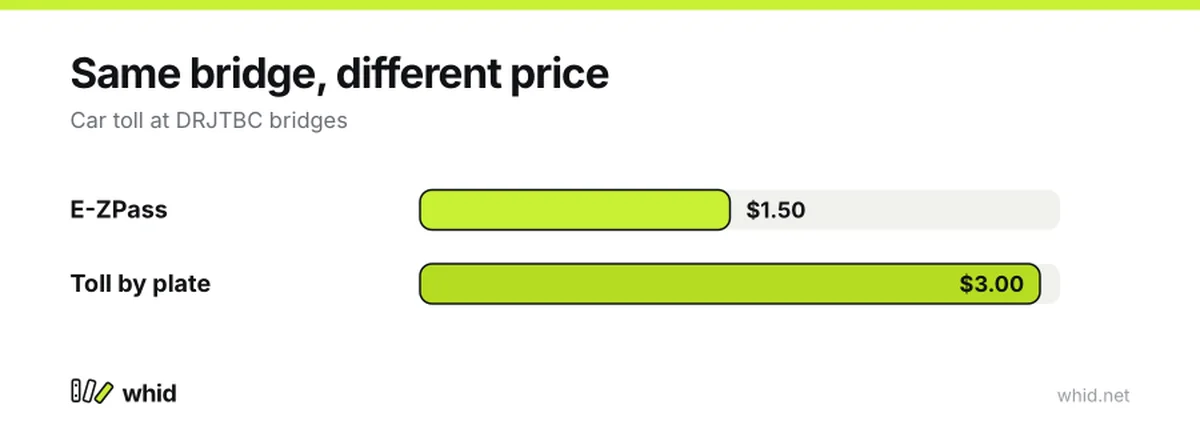
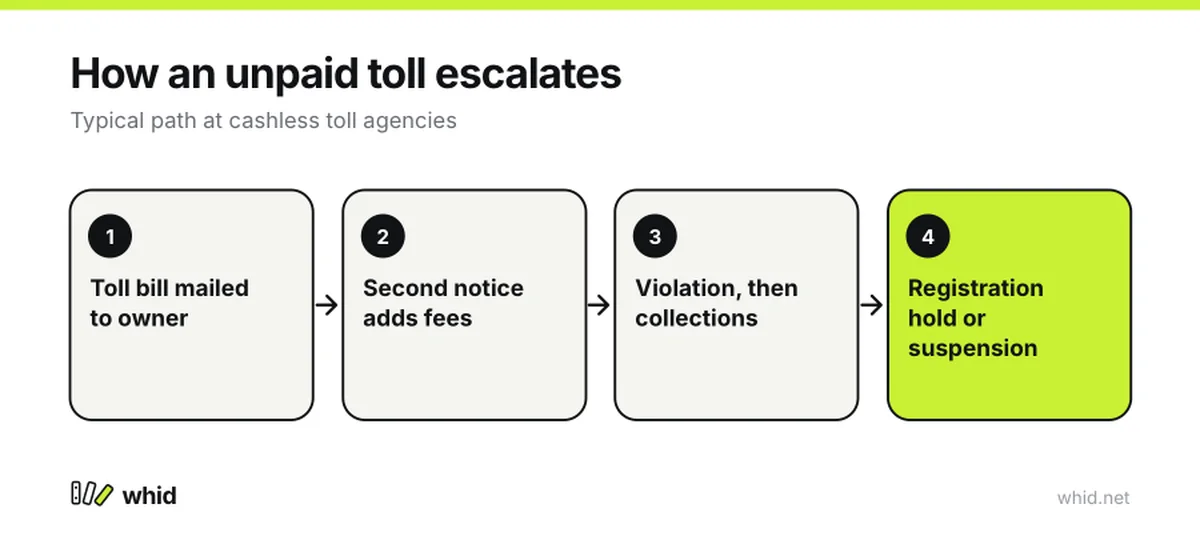
The first notice is usually just the toll, sometimes with a small processing fee. Many agencies charge more for billing by plate than for transponder users, because finding the owner and mailing an invoice costs money. On the Delaware River Joint Toll Bridge Commission's bridges, for example, the toll-by-plate rate for a car is $3, against $1.50 with E-ZPass.
Paying at this stage is cheap and easy, usually online with the plate number and the invoice number. It is worth doing even if you plan to dispute something else later.
Step two: fees and violations
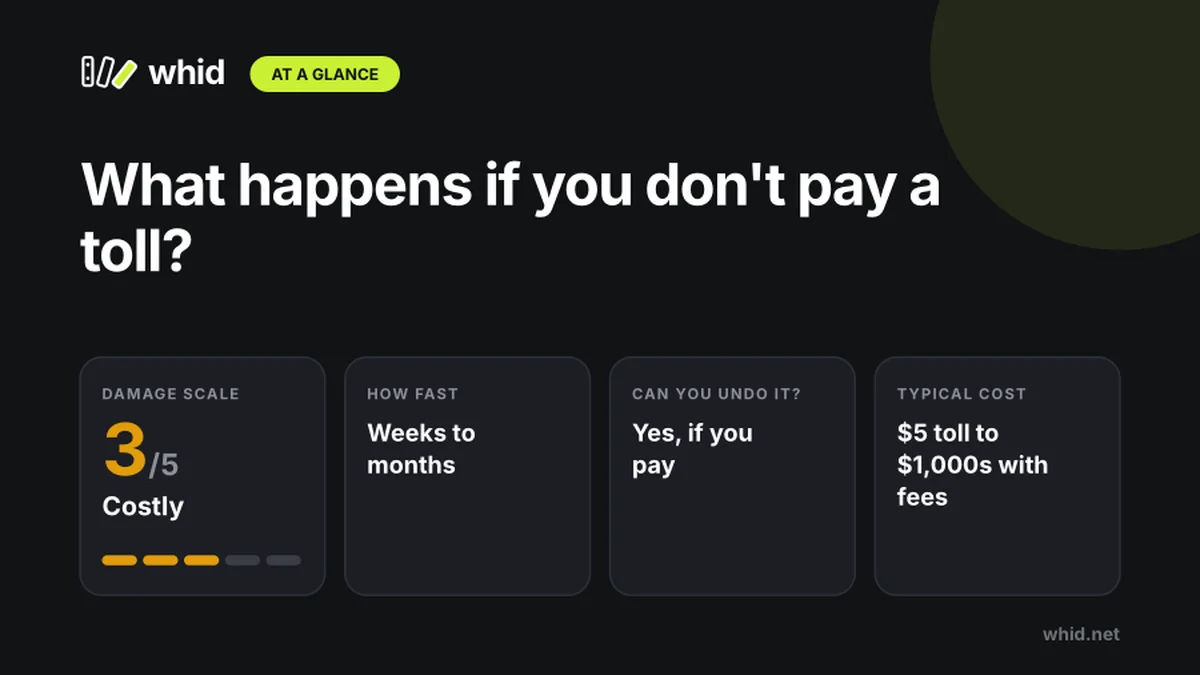
If the first bill goes unpaid, the next notice typically adds a late or administrative fee, and after that the toll is escalated into a violation. Violation fees are often far larger than the toll itself and can apply to every unpaid trip separately. A commuter who drove through the same gantry twice a day for a month without a working transponder can end up with dozens of violations, each carrying its own fee.
After the final notice, many agencies send the debt to a collection agency. Some can also seek a civil judgment or ban the vehicle from their roads and bridges.
Step three: your registration
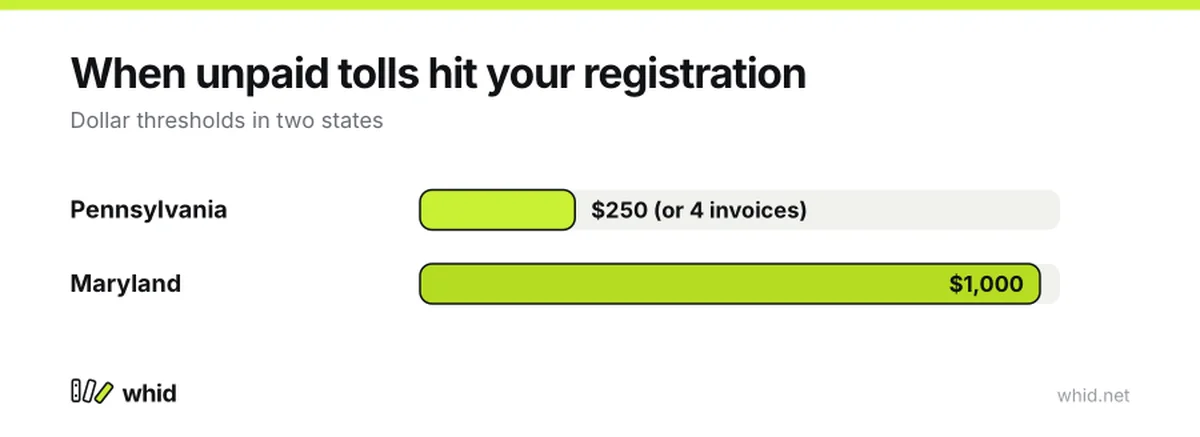
This is the consequence that catches people out. Several states block or suspend vehicle registrations over unpaid tolls. In Pennsylvania, since January 2023, four or more unpaid toll invoices, or $250 or more in unpaid tolls and fees, can lead to a registration suspension. Maryland refers drivers who owe $1,000 or more in unpaid tolls and penalties for suspension. New York can suspend a registration over repeated unpaid toll violations, and New York and Massachusetts place holds on registrations for unpaid tolls owed to each other.
A suspended registration turns a billing problem into a legal one. Driving an unregistered or suspended vehicle can bring tickets, towing and insurance trouble, and the suspension stays until every toll and fee is paid, sometimes with an extra restoration fee.
Out-of-state drivers are not off the hook
A common assumption is that a toll from another state cannot follow you home. Increasingly, it can. Toll agencies look up the owner through interstate vehicle record sharing, send the bill across state lines and hand unpaid debts to national collection agencies. Some states have reciprocity agreements to block each other's registrations, as New York and Massachusetts do.
The E-ZPass network also links many eastern and midwestern states, so a single transponder works across dozens of agencies, and an account in good standing with one usually pays tolls with the others. Other regions run their own systems, such as SunPass in Florida, TxTag in Texas and FasTrak in California, some of which now interoperate. Checking which transponders work on a route before a road trip is the easiest way to avoid a pile of mailed bills.
Rental cars and borrowed cars
If you drive a rental car through a cashless toll without your own transponder, the rental company pays the toll and passes it on to you, usually with its own daily or per-toll service fee. Those fees can be larger than the tolls. Check the rental company's toll program before the trip, or bring a compatible transponder.
When a friend or family member borrows your car, the bill still comes to you, because tolls follow the registered owner. Sorting out who pays is between you and them; the agency will not.
How to fix unpaid tolls
Most toll agencies have a lookup page where you can search by plate number and state. Do that first, especially if you have moved recently, because notices may have gone to an old address. Pay what you can confirm. If a charge is wrong, such as a plate misread, a sold car, or a transponder that should have paid, dispute it through the agency's official process and keep records.
Many agencies reduce or waive violation fees if you pay the underlying tolls, open a transponder account, or call before the debt goes to collections. It is worth asking. After you pay, ask for written confirmation, and if your registration was flagged, confirm with your state's motor vehicle agency that the hold has been lifted.
Beware of toll scam texts
Real unpaid tolls have spawned a wave of fake ones. Text messages claiming you owe a small toll and must pay through a link right away are a common scam, and the FBI and the FTC have warned about them. Toll agencies generally do not demand payment by text link. Do not click. Look up the agency's real website yourself, or call the number on a paper invoice, and check your account there.