Forgetting a credit card due date is one of the most common money mistakes there is — and one of the most fixable, if you move quickly. The key thing to understand is that there are two separate consequences running on two different clocks: the money you pay the card company, and the record that goes on your credit report.
The money clock starts immediately
The day after your due date, most issuers add a late fee. In the US, late fees at large issuers have commonly been around $30 for a first late payment and around $41 if you're late again within six months — check your own card agreement for the exact amount. Interest also keeps accruing on your full balance, and if you had a 0% promotional rate, the terms may let the issuer end it after a missed payment.
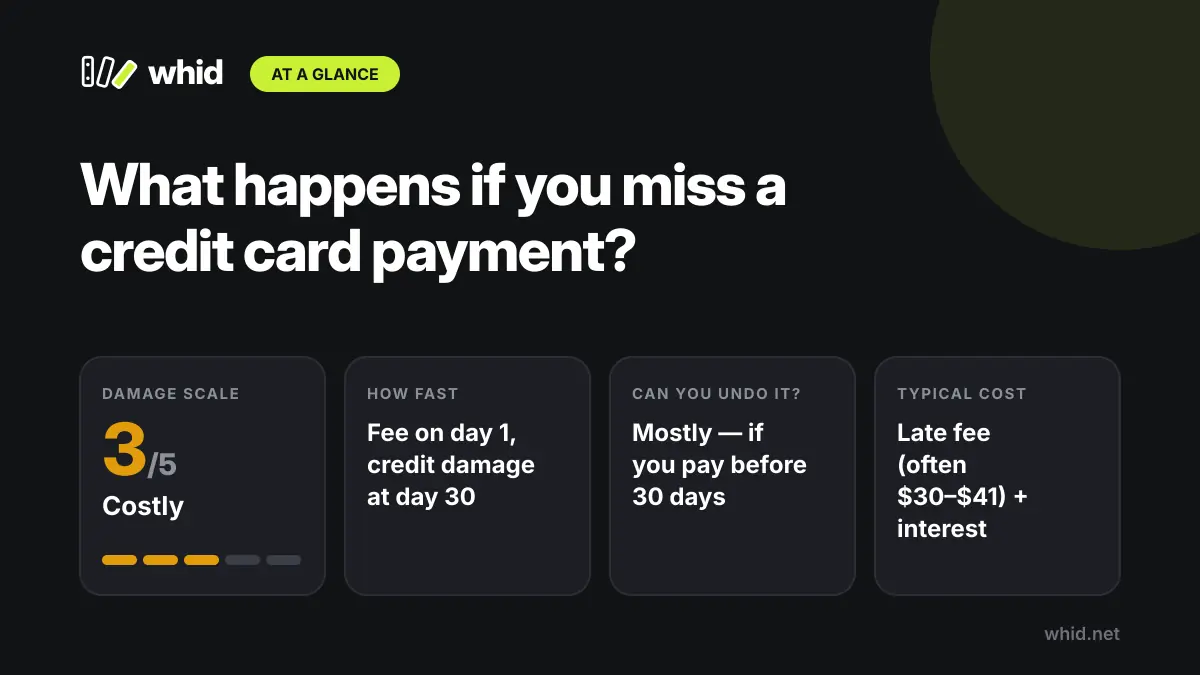
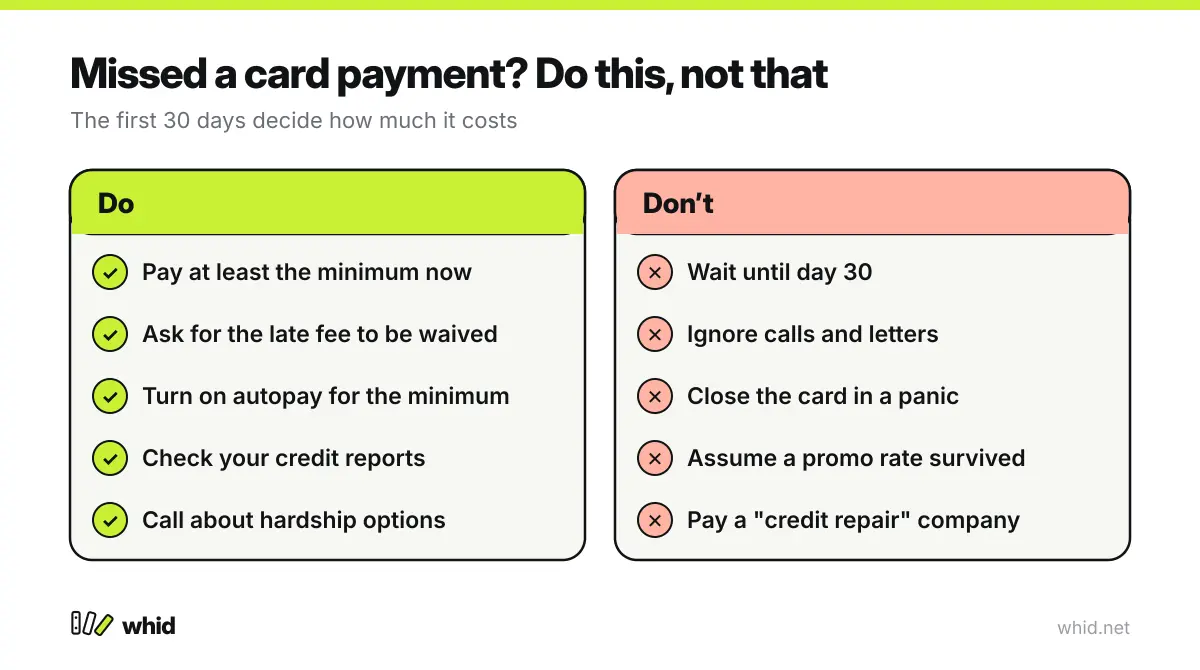
None of that is pleasant, but it's money — and money can often be negotiated. If this is your first slip, calling the number on the back of your card and politely asking for the late fee to be waived works surprisingly often.
The credit clock starts at 30 days
Card issuers generally report a payment as late to the credit bureaus only once it is 30 or more days past due. That's the real deadline. A payment made on day 3 or day 20 normally never appears on your credit report at all.
What if you can't pay at all?
If the problem is that the money isn't there, don't go silent. Call the issuer before you reach 30 days and ask about a hardship program: many offer temporarily lower payments or interest. Paying even the minimum keeps the account from being reported as late. A non-profit credit counsellor can also help you set up a debt management plan.
How to make sure it never happens again
Set up autopay for at least the minimum payment, then pay the rest manually. Most banking apps also let you move your due date to a day that suits your pay cycle — a five-minute change that prevents most missed payments.