whid

What happens if you overdraft your bank account?

Overdraw your checking account and your bank will either decline the payment or cover it and charge you a fee — sometimes several in one day. Here's how overdrafts work now, what they cost and how to get a fee refunded.

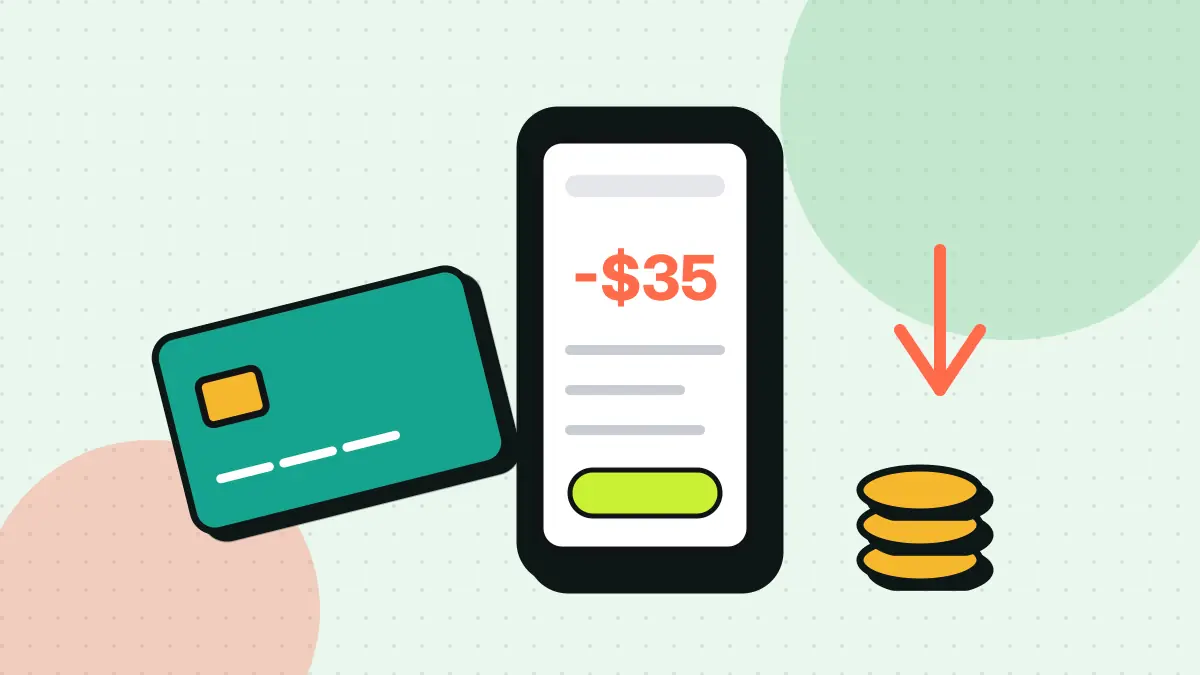
Illustration of a phone banking app showing a negative balance next to a bank card and coins
Illustration: whid
Damage scale 3/5 Costly
How fastFee usually posts the same or next day
Can you undo it?Often — many banks refund a first fee
Typical costOften $0–$35 per transaction

The short answer

When you spend more than you have, your bank does one of three things: declines the transaction, covers it and charges an overdraft fee, or covers it for free (a growing number of banks). Bankrate's 2025 survey put the average overdraft fee at about $27, though some large banks still charge around $35 — and fees can stack up on the same day. If you bring the balance back up quickly and ask, many banks will refund a first-time fee.

On this page 11 sections
  1. Step by step
  2. How an overdraft works
  3. What it costs now
  4. What happens if you don't fix it
  5. How to get an overdraft fee refunded
  6. How to avoid it next time
  7. Overdraft policies compared
  8. What to do now
  9. Myth vs fact
  10. Reader stories
  11. Quick questions

01 What happens, step by step

  1. Moment of purchase

    The bank decides

    Your bank approves or declines the payment based on its policy and whether you opted in to overdraft coverage for debit card purchases.

  2. Same or next business day

    Fee is charged

    If the bank covers the payment, an overdraft fee usually posts once the transaction settles. Several transactions can mean several fees.

  3. Several days

    Extended overdraft fees

    Some banks add an extra fee if your account stays negative for several days in a row.

  4. Weeks

    Account restricted

    If the balance stays negative, the bank may freeze debit card use and keep contacting you.

  5. About 30–60+ days

    Account closed

    A long-unpaid overdraft can lead the bank to close the account, send the debt to collections and report you to a banking database like ChexSystems.

Overdrafting usually happens by accident: an automatic bill comes out a day earlier than expected, a hotel holds more money than you thought, or a deposit hasn't cleared yet. What happens next depends far more on your bank's policy than on the amount you overspent.

How an overdraft works

An overdraft occurs when a payment is larger than your available balance. The bank can refuse the payment, or it can pay it anyway and lend you the difference for a short time. When it pays, a traditional bank charges an overdraft fee for each transaction it covers. A $4 coffee can therefore cost $30 or more.
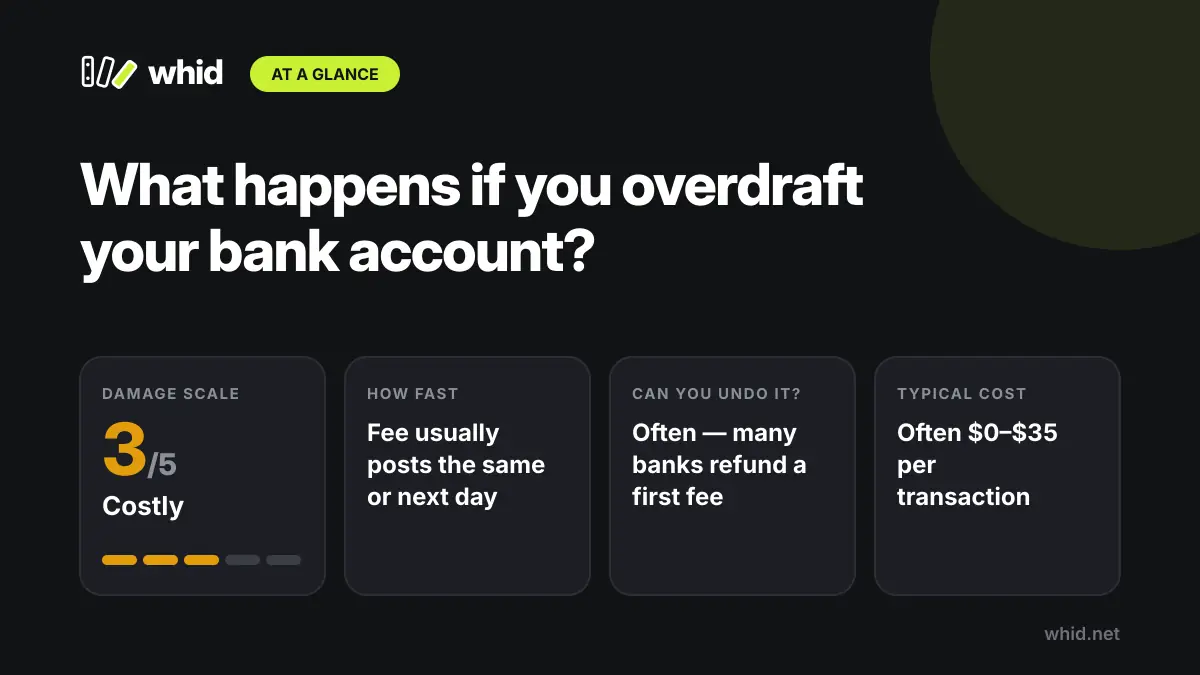
At a glance: What happens if you overdraft your bank account? Damage scale 3/5 (Costly); how fast: Fee usually posts the same or next day; typical cost: Often $0–$35 per transaction.
At a glance: the damage rating, how fast it happens, whether it can be undone and what it usually costs.

In the US, banks generally can't charge overdraft fees on everyday one-time debit card purchases and ATM withdrawals unless you have opted in to that coverage. Checks, automatic bill payments and recurring debits can still trigger fees without opting in.

What it costs now

Overdraft fees have shifted a lot in the past few years. Several large banks — including Capital One, Citi and Ally — have eliminated overdraft fees on consumer accounts, while others cut them to around $10 or added grace periods. A federal rule that would have capped overdraft fees at large banks was overturned in 2025, so traditional fees of around $35 still exist at some banks. Bankrate's 2025 checking survey put the average at about $27.
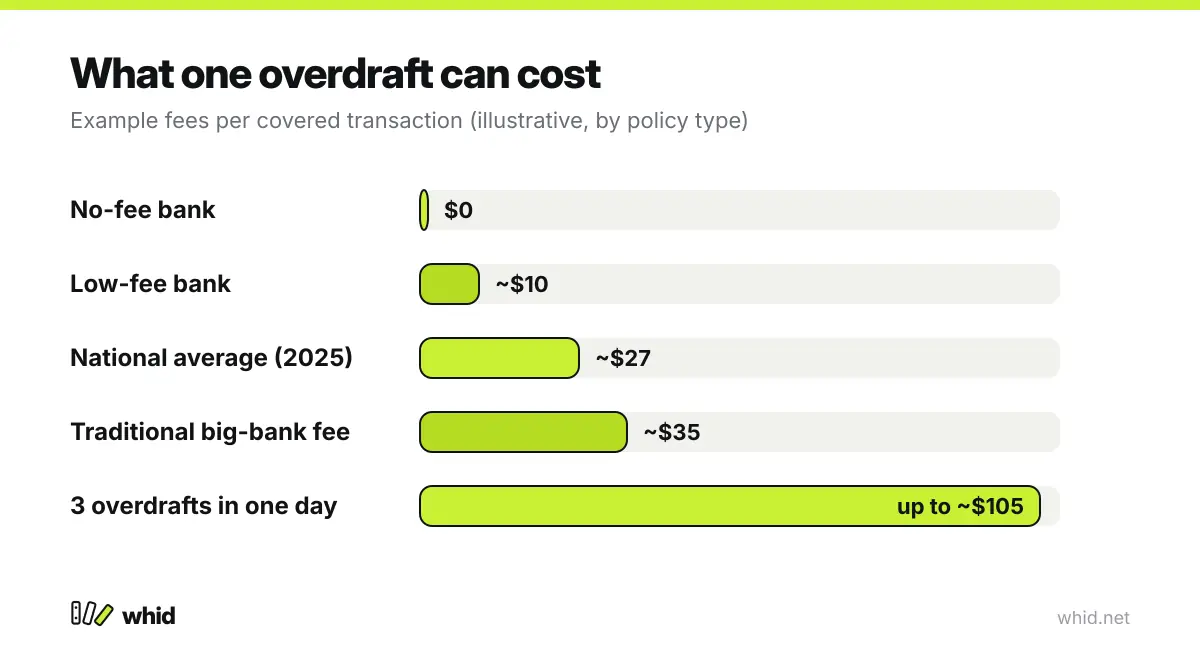
Watch for stacking: some banks charge a fee for every transaction that overdraws your account on the same day, up to a daily maximum. Three small purchases can mean three fees.
Bar chart comparing overdraft fees: $0 at no-fee banks, about $10 at low-fee banks, about $27 on average, about $35 at traditional banks and up to $105 for three overdrafts in a day
The same mistake can cost nothing or more than $100, depending on your bank.

What happens if you don't fix it

A negative balance doesn't go away by itself. Some banks charge an extended overdraft fee after several days. If the account stays negative for weeks, the bank may close it and send the amount to a collection agency. Banks also report closed accounts with unpaid balances to consumer reporting agencies such as ChexSystems, which can make it harder to open a new checking account for years.

How to get an overdraft fee refunded

Call or chat with your bank as soon as you've deposited enough to cover the negative balance. Explain what happened and ask if they can waive or refund the fee. Many banks will do this once, particularly for long-standing customers. Be polite and specific — "I've brought the account back to positive; could you refund the overdraft fee from Tuesday?" works better than a general complaint.

How to avoid it next time

Low-balance alerts by text or app are the simplest fix. Linking a savings account for overdraft protection usually costs little or nothing. If you'd rather have a payment declined than pay a fee, don't opt in to debit card overdraft coverage — or switch to a bank that doesn't charge overdraft fees at all.
02 Overdraft policies compared

Policies change — check your bank's current fee schedule.

Type of bank policyWhat happens when you overspendTypical cost
No overdraft feesTransaction is declined or covered free$0
Low-fee overdraftCovered, small fee, often a daily capAbout $10–$15
Traditional overdraftCovered, fee for each transactionUp to ~$35 each
Overdraft protection transferMoney moves from linked savingsOften $0 at many banks
Debit card, not opted inCard purchase is usually declined$0 (but the purchase fails)

03 What to do right now

  1. Deposit enough to get back above $0 as fast as possible. This stops extended fees and further declined payments.
  2. Ask for a fee refund. Many banks refund a first or occasional overdraft fee on request.
  3. Check which payments are still pending. Upcoming automatic payments may overdraw the account again.
  4. Set up low-balance alerts. Most banking apps let you choose a threshold, such as $50.
  5. Review your overdraft settings. Opt out of debit card coverage or link a savings account for transfers.

04 Myth vs fact

Myth Overdrafting hurts your credit score.

Fact Checking accounts aren't reported to the credit bureaus. Your score is only affected if an unpaid balance goes to a collection agency.

Myth The bank always declines a payment if there's no money.

Fact Many banks pay the transaction and charge a fee instead, especially for checks and automatic payments.

05 Has this happened to you?

Real experiences from readers. Stories are checked by an editor before they appear and are not professional advice.

No reader stories yet — be the first to share yours.

Share what happened to you

By sending, you agree that we may publish your story (first name and location only). See our privacy policy.

06 Quick questions

How much is an overdraft fee?

It depends on the bank. Some charge nothing, some around $10–$15, and some still charge up to about $35 per transaction.

How long can my account stay overdrawn?

Banks set their own rules, but if an account stays negative for around 30–60 days or more, many banks close it and send the balance to collections.

Can an overdraft go on my credit report?

Not directly. It can appear on a ChexSystems report, and if sent to collections, a collection account may affect your credit.

Sources

  1. Consumer Financial Protection Bureau — What is an overdraft and how does it work?
  2. Bankrate — Banks that have cut or eliminated overdraft fees (2025)
  3. Your bank's current fee schedule and account agreement

General information only. Laws, prices and procedures vary by location and change over time — check with a qualified professional for your situation. Full disclaimer.