
The wrapper on the floor, the dog looking very pleased with itself — every owner knows the moment. Chocolate toxicity is one of the most common reasons for calls to pet poison lines, and the good news is that most cases end well when owners act quickly.
Why chocolate is toxic to dogs
Cocoa contains two stimulants from the same chemical family: theobromine and a smaller amount of caffeine. Humans break them down quickly. Dogs take much longer, so the stimulants build up and over-excite the heart and nervous system.

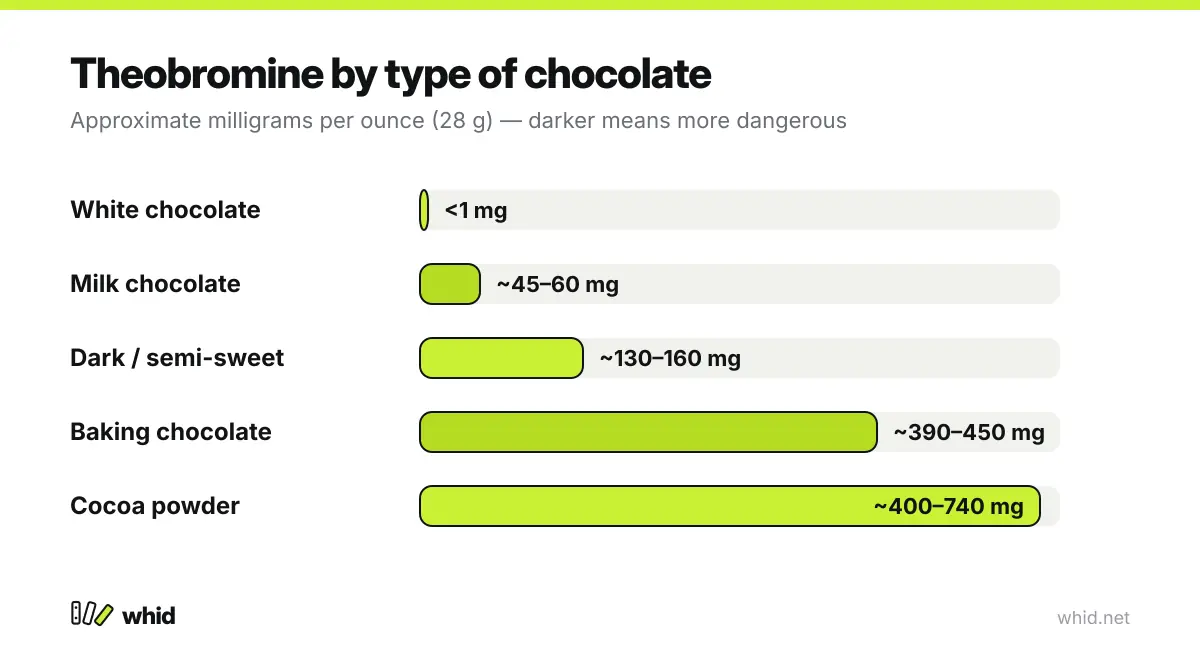
The darker and more bitter the chocolate, the more theobromine it contains. That's why a few squares of baking chocolate can be more dangerous than a whole milk chocolate bar.
Work out the three numbers
When you call the vet, they will ask:
- What kind of chocolate? Keep the wrapper — the cocoa percentage helps.
- How much, at most? Count missing pieces and assume the worst case.
- How much does your dog weigh, and when did it happen?
Also mention anything else that was in the treat: raisins, macadamia nuts and the sweetener xylitol are dangerous to dogs on their own.
What treatment looks like
If the chocolate was eaten recently, the vet may give an injection to make your dog vomit, followed by activated charcoal to reduce how much is absorbed. Dogs with symptoms may need IV fluids, heart monitoring and medication to control tremors or a racing heart. Most stay for a few hours; serious cases may stay overnight.
Prevention
Keep chocolate, baking supplies and cocoa powder in closed cupboards, and be extra careful at Easter, Halloween, Christmas and Valentine's Day — when chocolate is lying around and calls to poison lines spike.