
Many cat owners only learn about lilies after a bouquet arrives on a birthday or for Easter. The flowers look harmless and smell lovely — yet for cats they are among the most dangerous plants in the home. Dogs don't share this sensitivity, which is one reason the risk is so poorly known.
Why lilies are so toxic to cats
True lilies (genus Lilium) and daylilies (Hemerocallis) contain a toxin that damages the cells lining the kidney tubules in cats. Scientists still haven't fully identified the substance, but the effect is well documented. The amount needed is tiny: chewing part of a leaf, licking pollen off fur after brushing past a bouquet, or drinking water from the vase can be enough.
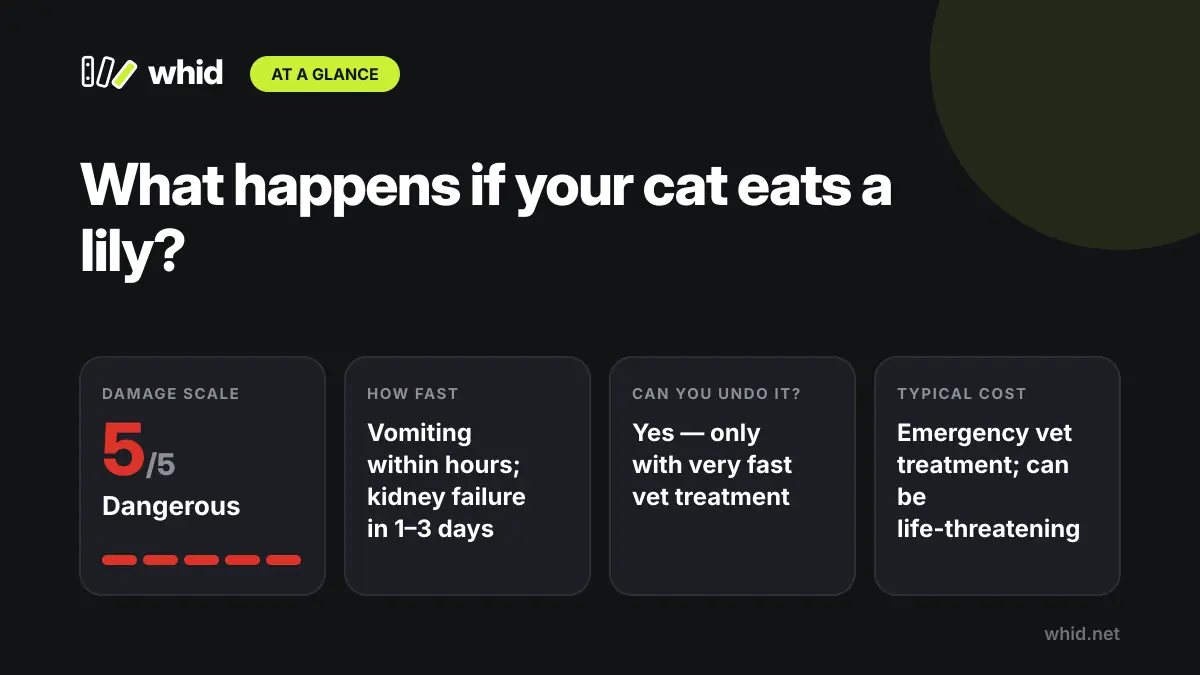
The US Food and Drug Administration warns that all parts of these plants are dangerous to cats, and veterinary poison lines treat any exposure as an emergency.
The false recovery
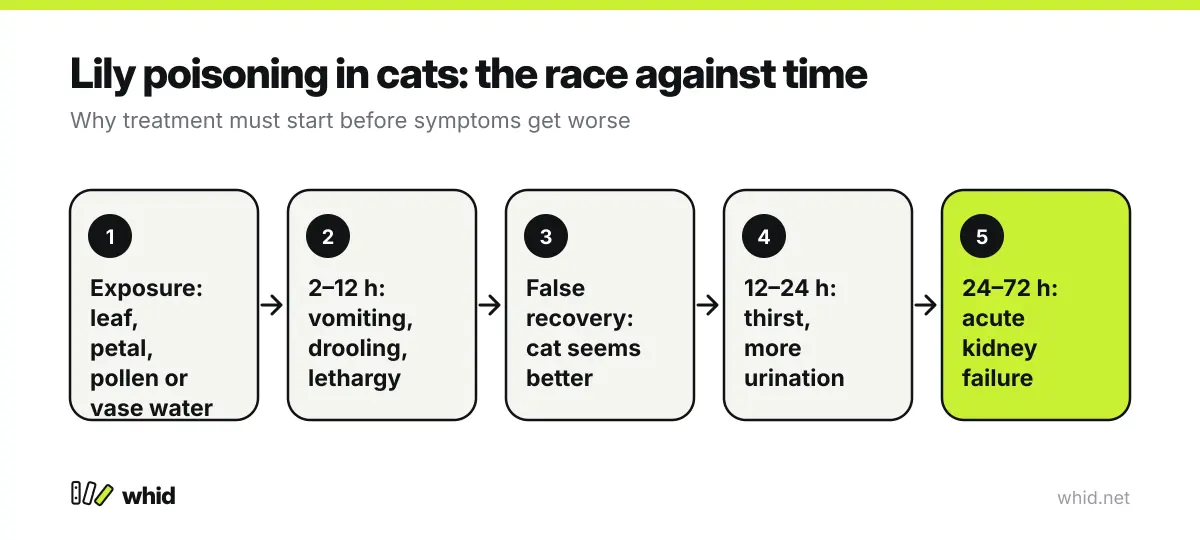
One of the most dangerous features of lily poisoning is the timeline. A cat may vomit and seem unwell for a few hours, then appear to feel better. Meanwhile, the kidneys are being damaged. By the time the cat stops eating, drinks a lot or stops producing urine, the kidneys may already be failing.
How vets treat it
When a cat is seen early, the vet usually induces vomiting, gives activated charcoal to bind remaining toxin, and starts intravenous fluids for 48 hours or more to protect the kidneys. Blood tests track kidney values. Cats treated within the first several hours have a much better outlook. Once kidney failure is established, treatment becomes more intensive and the prognosis is guarded; some cats need dialysis.
Not every "lily" is the same
Several plants are called lilies without being true lilies. Peace lilies and calla lilies contain insoluble calcium oxalate crystals that irritate the mouth and cause drooling and vomiting, but not kidney failure. Lily of the valley is a different danger: it affects the heart. If you're unsure what plant your cat chewed, a photo of the plant helps the vet decide.
The only real prevention
Keep true lilies and daylilies out of homes with cats completely — including bouquets, potted plants and gardens your cat can reach. Ask florists to leave lilies out of arrangements, and let friends know if they plan to send flowers.