Dogs swallow coins more often than you would think. A purse left on the floor, a jar knocked off a shelf, a puppy exploring a car's cup holder. Most owners assume a coin will simply pass, the way a swallowed pebble might. With most coins that is a fair guess. With a modern penny it is not, and the reason is what the coin is made of.
Why pennies are different
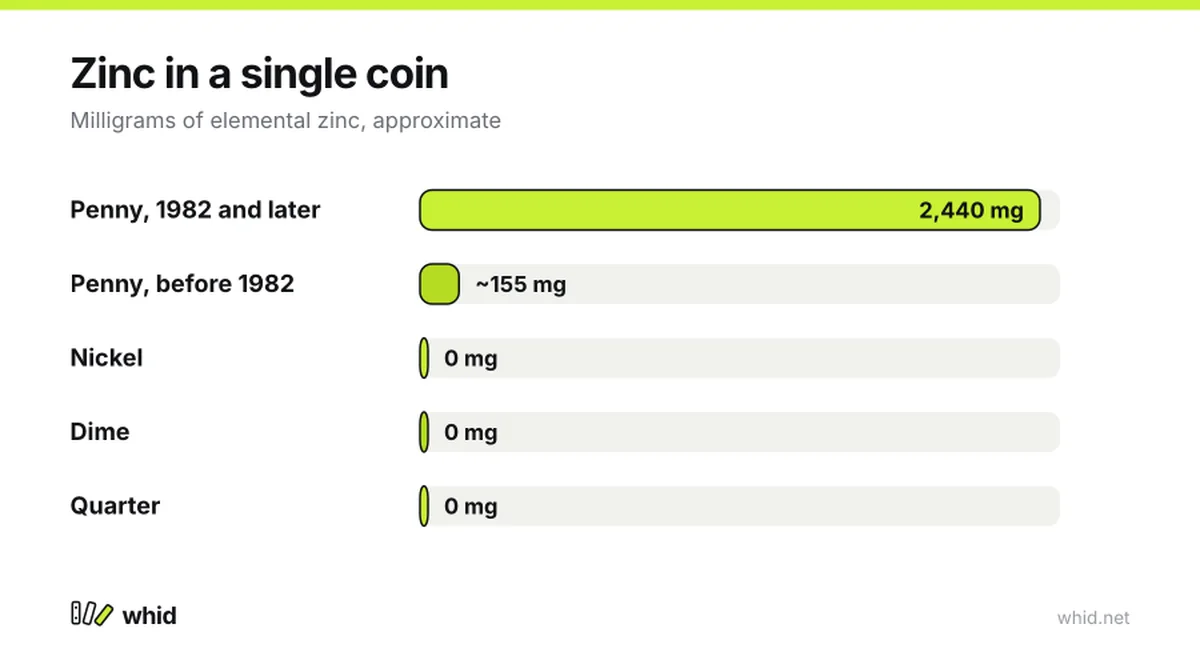
A US penny looks like copper, but since 1982 it has really been a zinc coin with a thin copper coating. According to the Merck Veterinary Manual, pennies minted since then are 97.5% zinc, which works out to about 2,440 mg of elemental zinc in each one. Older pennies were 95% copper and contain only a small fraction of that.
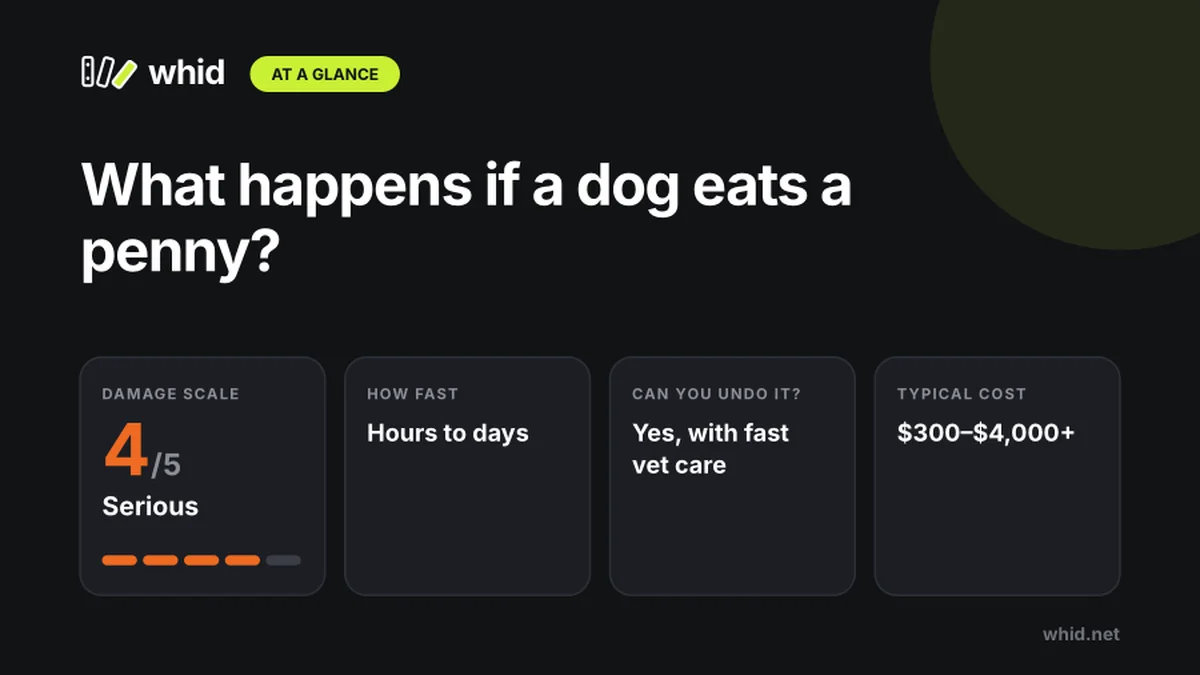
The stomach is exactly the wrong place for that much zinc. Zinc dissolves readily in acid, so a penny sitting in the stomach keeps releasing it into the body. Coins also tend to stay in the stomach rather than moving on, which gives them more time to leach. The ASPCA notes that the toxic dose has not been firmly established and that even a single penny poses a risk, especially for small dogs.
What zinc does inside a dog
Zinc poisoning usually starts with the stomach: vomiting, diarrhea, loss of appetite and lethargy. Those signs are easy to mistake for an ordinary upset tummy.
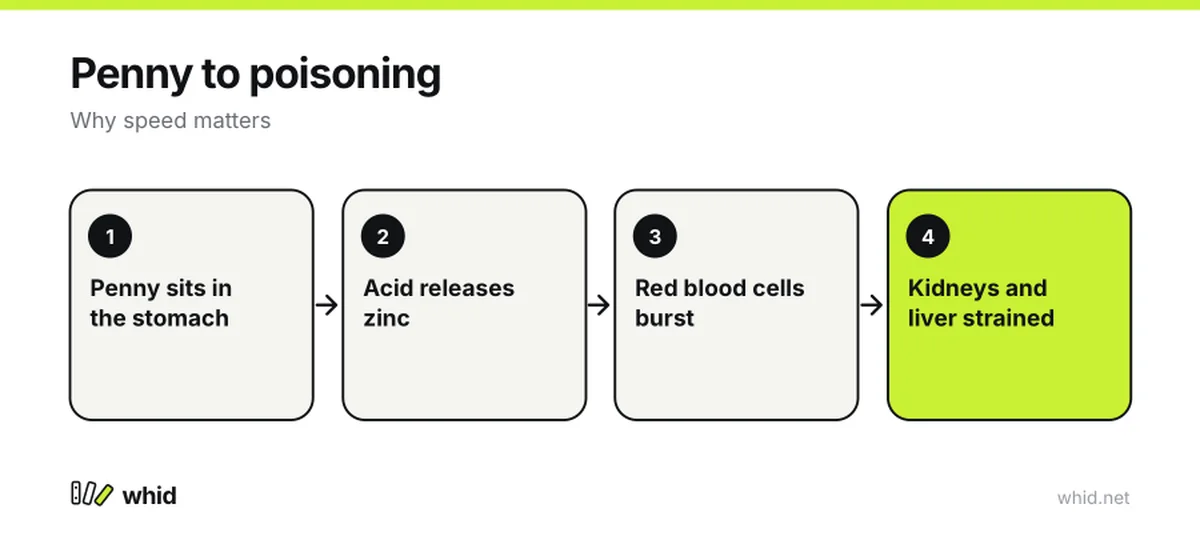
The dangerous part comes next. Absorbed zinc damages red blood cells so they burst, a condition called hemolytic anemia. That can show up as pale or yellow gums, weakness, a fast heartbeat and urine that turns red, orange or brown. As the damage spreads, the kidneys, liver and pancreas can be hurt as well. Without treatment, zinc toxicosis can be fatal.
Timing varies. Signs may appear within hours, but because metal objects can take days to leach enough zinc, the serious phase can arrive several days after the coin was swallowed. Many penny cases are not witnessed at all, which is why vets take unexplained anemia in a dog very seriously.
What the vet will do
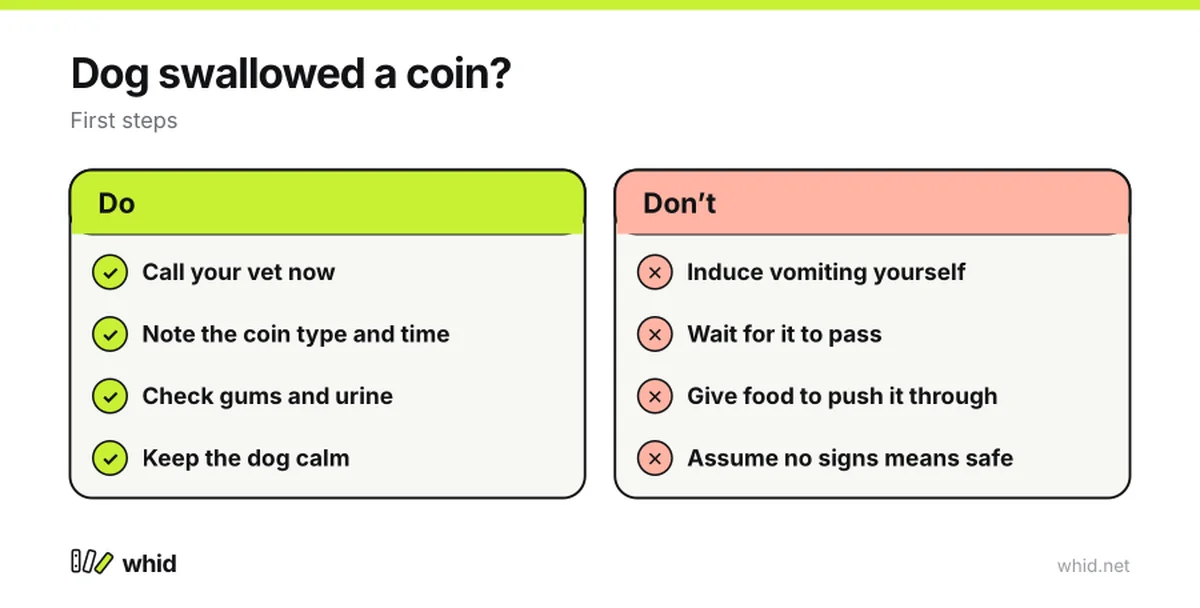
An X-ray is the fastest way to confirm a coin. Metal shows up as a bright white disc, and the vet can see whether it is still in the stomach. If it is, removing it is the priority, usually with an endoscope passed down the throat under anesthesia or, if that fails, surgery. Getting the source out stops the zinc from rising further, and in many cases the body then recovers on its own.
Blood work shows whether red blood cells are being destroyed and how the kidneys and liver are coping. Treatment after removal often includes IV fluids, anti-nausea medicine and stomach protectants. Dogs with severe anemia may need a blood transfusion. Costs vary a lot with how quickly the dog is seen: an X-ray and endoscopic removal can run a few hundred to a couple of thousand dollars, while surgery, hospitalization and transfusions can push the bill much higher.
Do not try to fix it at home
It is tempting to make the dog vomit. Do not do it unless a vet or a poison control line tells you to. A coin can lodge in the esophagus on the way back up, and some dogs should never be made to vomit at all. Waiting to "see if it passes" is also risky with a penny, because the damage happens while you wait.
If you cannot reach your own vet, an emergency clinic or a pet poison line can advise you. The ASPCA Animal Poison Control Center is available 24 hours a day at (888) 426-4435, and a consultation fee may apply.
What about other coins?
US nickels, dimes and quarters are made of copper and nickel, not zinc, so they do not cause zinc poisoning. They can still get stuck. A large coin in a small dog can block the stomach outlet or the intestines, which causes vomiting, belly pain and a dog that refuses food. Canadian pennies made between 1997 and 2001 are also mostly zinc. Other zinc sources include some board game pieces, zipper pulls, galvanized nuts and bolts, and zinc supplements.
Cats, ferrets and other pets
Dogs are the most common penny eaters simply because they will swallow almost anything, but they are not the only ones at risk. Cats, ferrets, birds and other small pets can develop zinc poisoning from the same coins, and because they are smaller, a single penny is a bigger dose for them. Pet birds are particularly vulnerable to zinc from cage hardware and galvanized wire as well as coins.
Zinc oxide creams, like diaper rash ointment and some sunscreens, are a different situation. A dog that licks some cream usually just gets an upset stomach, because zinc in that form is poorly absorbed in small amounts. It is still worth a call to your vet if a whole tube was eaten, but it is not the same emergency as a swallowed penny.
Keeping coins away from dogs
Treat loose change like medication. Keep coin jars on high shelves or in closed cabinets, empty pockets before clothes hit the floor, and keep bags zipped and out of reach. Puppies and dogs that already eat non-food items need the most care. A dog that has swallowed one coin may well try again.