Those little white packets come in almost everything: shoe boxes, handbags, vitamins, electronics, beef jerky. Each one says DO NOT EAT in capital letters, which is alarming when you find a chewed-up one next to your dog. The good news is that the warning is mostly about choking and labeling rules, not poison. The less good news is that not every packet that looks like silica gel actually is.
Why silica gel is usually harmless
Silica gel is a form of silicon dioxide, the same basic compound as sand, made into small porous beads that soak up moisture. It is chemically inert, which means it does not react with the body. Pet Poison Helpline describes it as virtually non-toxic, and the ASPCA Animal Poison Control Center says that serious problems after a dog eats it are uncommon.

The beads do not swell up like some absorbent products. They simply hold moisture. In most cases the beads and the paper or plastic sachet move through the gut and come out in the stool within a day or two without the dog noticing at all. If the dog ate a lot of beads relative to its size, mild vomiting or diarrhea is possible, and that usually settles on its own.
The real risk: a blockage
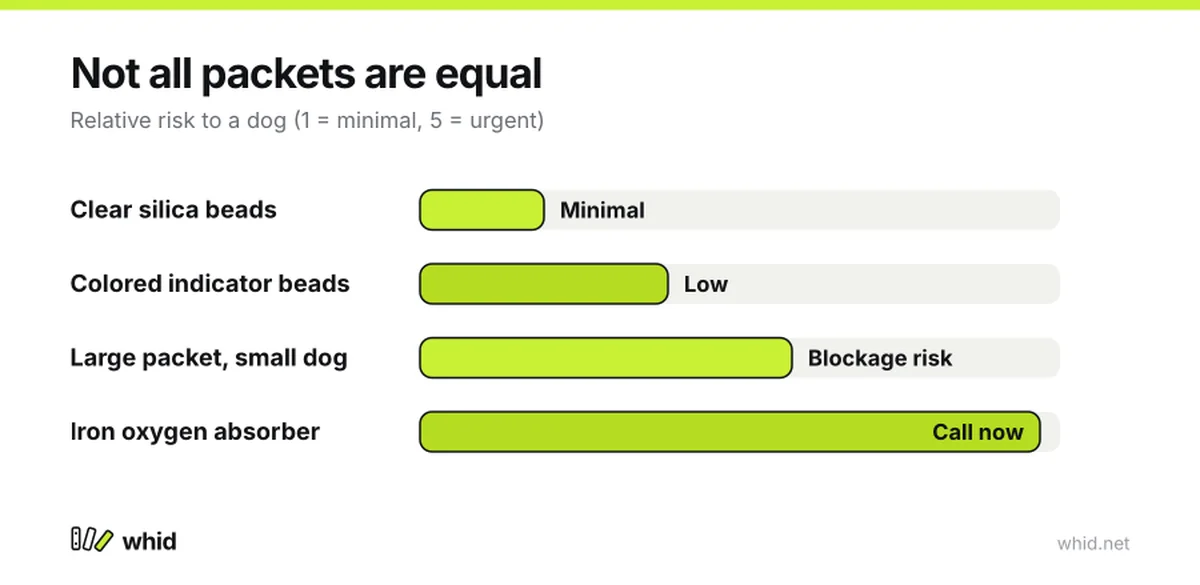
The packet itself is the bigger concern than what is inside it. A whole sachet, especially a large one from a shoe box or a bulk food container, can get stuck in the stomach or intestines of a small dog. Blockages are not common with silica packets, but they are serious when they happen.
Signs of an obstruction usually appear within hours to a couple of days: repeated vomiting, especially after eating or drinking, a tender or bloated belly, straining with no stool, low energy and a dog that suddenly will not eat. Any of those need a vet the same day.
Make sure it really was silica
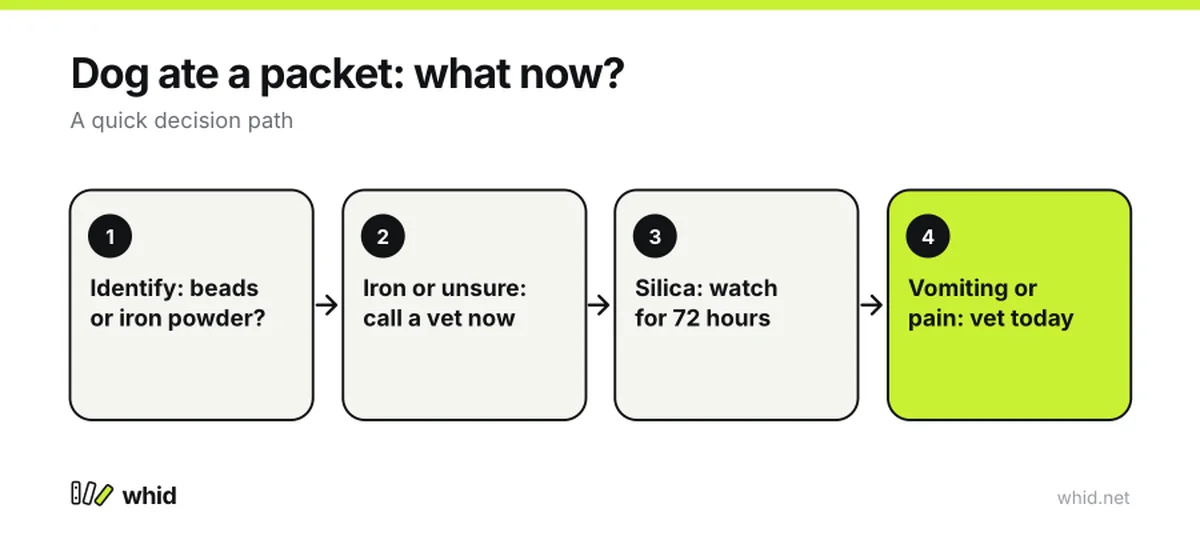
The most important thing you can do is identify the packet. Small packets from food, such as jerky, dried snacks or pill bottles, are often oxygen absorbers rather than silica gel. They contain iron powder, which looks like dark gray or rusty granules rather than clear beads, and the packet may feel gritty or warm. Iron can be genuinely toxic. Pet Poison Helpline says the most severe cases from oxygen absorbers have involved small dogs under about 15 pounds.
Iron poisoning starts with vomiting, sometimes with blood, and diarrhea, and can progress to more serious problems over the next day or two. If the packet came from a food product, if you see dark powder, or if you simply are not sure, call your vet or a pet poison line right away and keep the packaging to show them.
Two other details are worth checking. Some silica gel contains colored indicator beads, which change color as they absorb moisture. Larger amounts of those deserve a call, because the dyes and indicators are not inert. And a packet that came from a medication bottle may have absorbed some of the drug, so tell the vet what the medicine was.
What to do in the next 72 hours
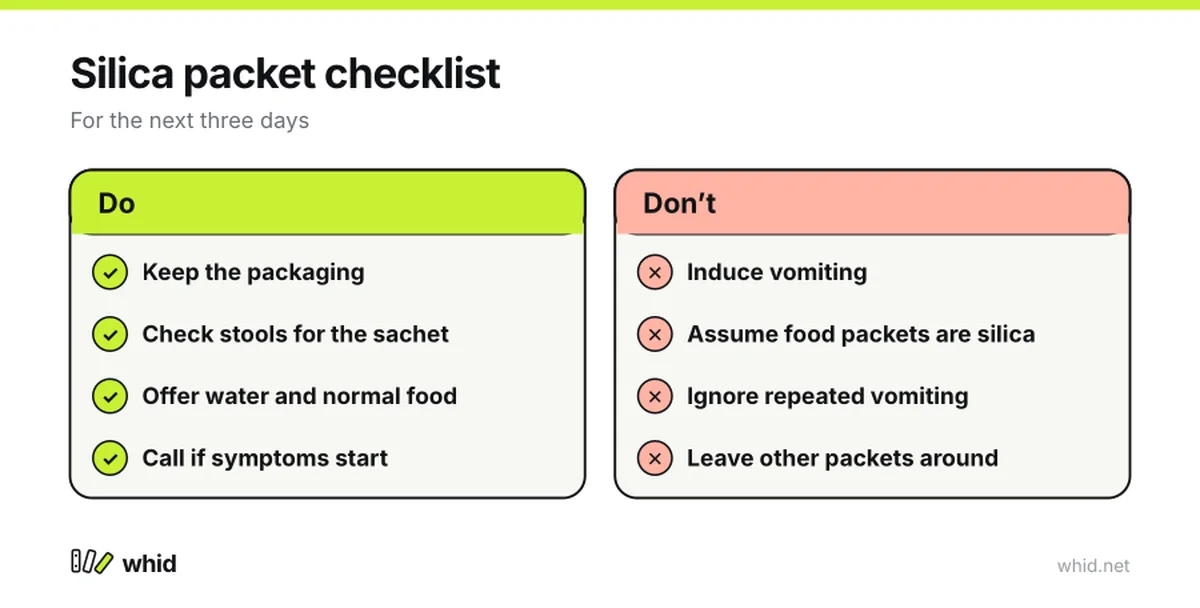
If it was one ordinary silica packet and your dog is acting normally, you can usually watch at home. Take away any remaining packets and pieces. Offer water and normal meals. Check the stool over the next two or three days for the sachet or beads; finding the packet is reassuring.
Call your vet if your dog is small and swallowed the packet whole, if it ate several packets, if vomiting or diarrhea starts, or if anything about its behavior changes. Do not try to make your dog vomit unless a vet tells you to. A packet coming back up can be inhaled or get stuck.
For anything that may have contained iron or medication, call straight away rather than waiting for signs. The ASPCA Animal Poison Control Center can be reached at (888) 426-4435, and a fee may apply.
Other packets dogs find
Silica and iron are not the only small packets in a household. Charcoal or activated carbon sachets, used to absorb odors in shoes and fridges, are also considered close to non-toxic, with the same blockage caveat. Clay desiccant packets behave much like silica. Hand warmers, on the other hand, contain iron powder like oxygen absorbers do, and a chewed hand warmer deserves a call to the vet.
Then there are packets that are not desiccants at all: cat litter clumping crystals, dishwasher pods and toilet bowl tablets. These can be genuinely harmful. If you are not sure what a packet was, photograph what is left of it and the product it came with before you call. That photo often answers the question in seconds.
Keeping packets out of reach
Dogs are drawn to these packets because they come out of things that smell interesting, like food bags, leather shoes and handbags. Open new purchases at a counter rather than on the floor, drop packets straight into a covered bin, and check jacket pockets and bags where they tend to hide. Bulk food buyers should be especially careful with oxygen absorbers, since those are the packets that cause real poisonings.