It's the most ignored light on the dashboard. It comes on, the car seems to drive fine, and weeks go by. Sometimes that's harmless — but the light exists because something is out of spec, and the price of ignoring it depends entirely on what that something is.
What the light actually means
Since 1996, cars sold in the US have used an on-board diagnostics system called OBD-II. It constantly checks the engine and emissions systems. When a reading stays outside normal limits, the computer stores a diagnostic trouble code and turns on the malfunction indicator lamp — the check engine light. The light itself doesn't tell you what's wrong; the code does.
Steady vs flashing
This is the single most important thing to know:
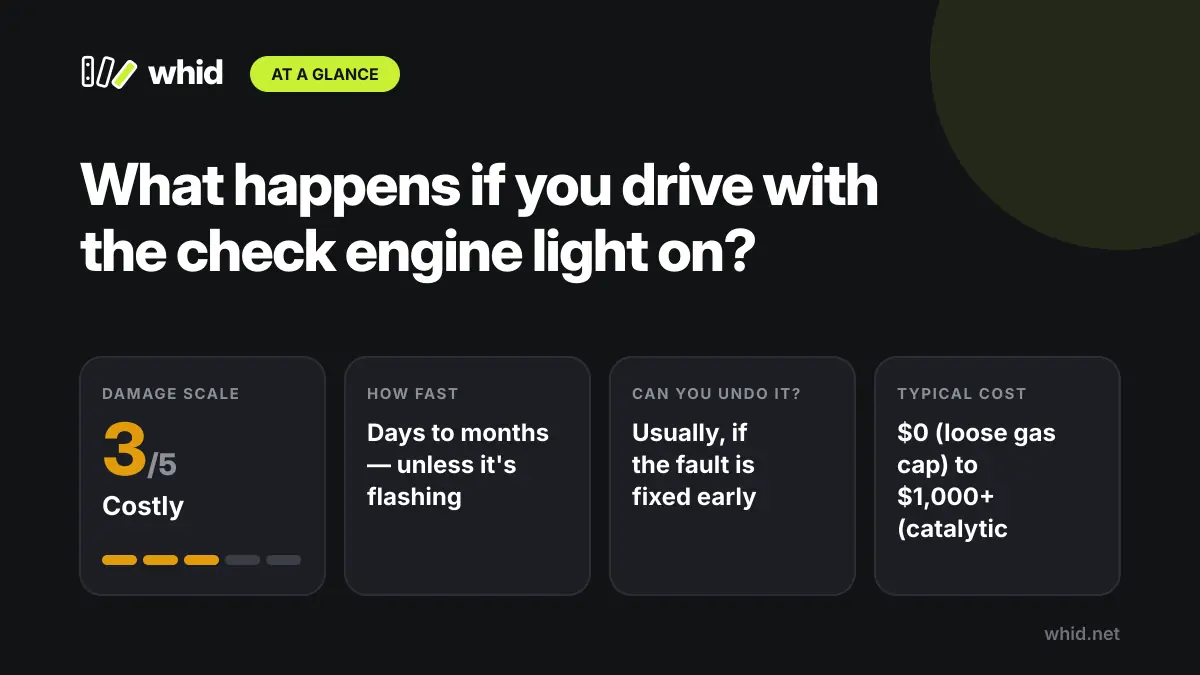
- Steady light: a fault has been detected. Drive normally, but get the code read within a few days.
- Flashing light: the engine is misfiring badly enough to damage the catalytic converter. Ease off, avoid heavy loads and high speeds, and get to a mechanic as soon as possible — or have the car towed.
Why "it drives fine" can be expensive
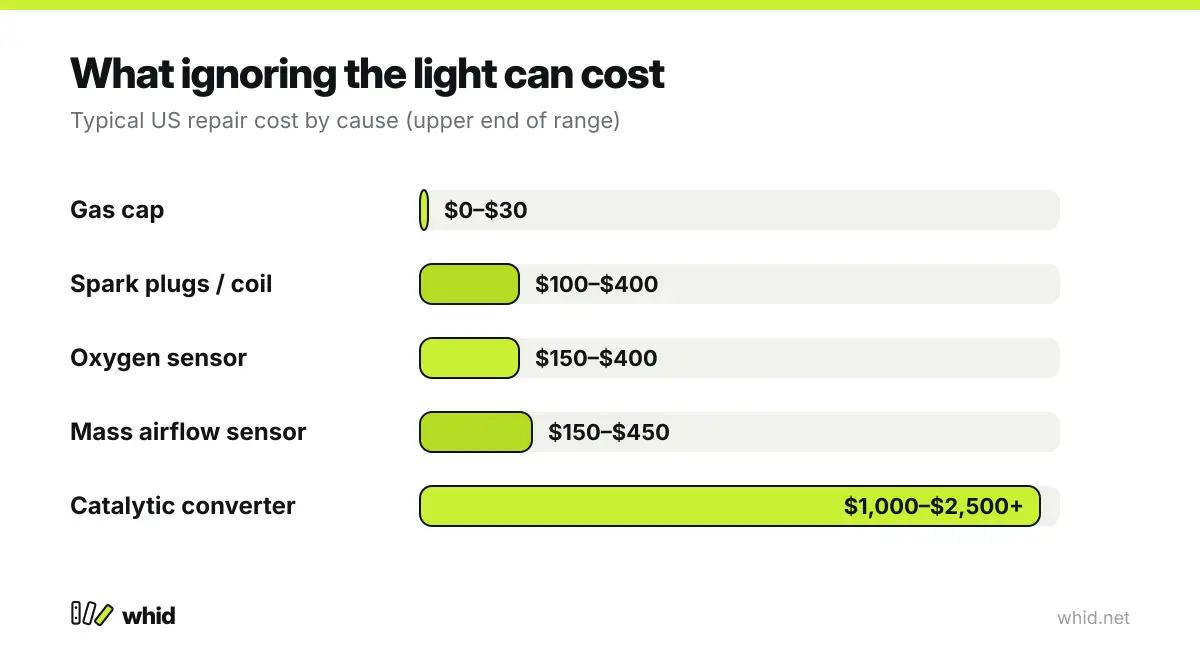
Many faults behind a steady light don't change how the car feels — at first. A failing oxygen sensor quietly makes the engine run rich, using more fuel and sending extra heat into the catalytic converter. A misfiring spark plug overworks its ignition coil. These are relatively cheap parts, but left alone they can damage the converter, which is one of the most expensive components in the exhaust system.
There's a practical problem too: while the light is on for one fault, it can't warn you about a second one.
How to find out what's wrong
Every car since 1996 has a standard OBD-II port, usually under the dashboard near the steering column. Many auto parts stores in the US will read your codes for free, and basic Bluetooth OBD-II readers cost around $20–$40. A code such as P0420 or P0302 points to the system involved; a good mechanic then confirms the actual cause before replacing parts.
Start with the gas cap
If the light came on right after you refuelled, check that the gas cap is tight and its seal isn't cracked. A loose cap lets fuel vapour escape and is one of the most common causes. After tightening it, the light may take several drive cycles to switch off.