You're tired, the pumps look the same, and you only notice the green or yellow handle when the tank is half full. Breathe: the outcome depends almost entirely on what you do in the next five minutes.
Why diesel doesn't work in a gasoline engine
Gasoline engines use spark plugs to ignite a light, easily vaporised fuel. Diesel is heavier and oilier and is designed to ignite under high compression instead of from a spark. In a gasoline engine it doesn't burn properly, so the engine misfires, coats the spark plugs and injectors with residue and eventually stalls.

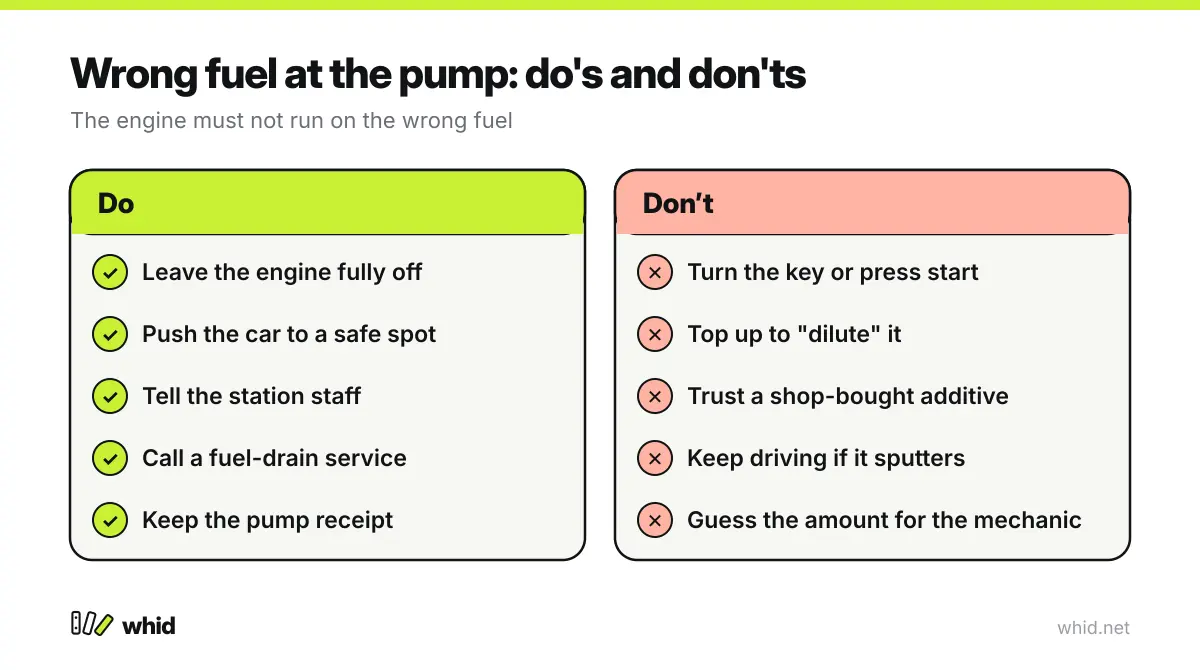
The one rule: don't start it
As long as the wrong fuel is only in the tank, the fix is simple: the tank is drained, the system flushed and refilled with the right fuel. The moment the engine runs, contaminated fuel moves through the pump, filter, lines and injectors — and every part it touches may need cleaning or replacing. On many modern cars, even turning the key to "on" or pressing the start button without starting primes the fuel pump.
Already driving? Pull over now
If the car starts to hesitate or smoke after filling up, find a safe place to stop as soon as possible, switch off the engine and don't try to restart it. Driving further can overheat the catalytic converter as unburned fuel reaches the exhaust — and that part alone can cost more than the whole fuel-drain bill.
The reverse mistake is worse
Gasoline in a diesel car is the more expensive error. Diesel fuel lubricates the high-pressure fuel pump; gasoline acts like a solvent. Running a diesel engine on a gasoline mix can wear the pump and spread metal particles through the system, leading to replacement of the pump and injectors.
Will insurance pay?
It depends on your policy. Some car insurance and roadside-assistance plans cover "misfuelling" — particularly in the UK and Europe. Check before paying out of pocket, and keep every receipt.