whid

What happens if you drive with the parking brake on?

A short distance usually does nothing. Miles at speed can glaze pads, warp rotors and boil brake fluid. How to tell which happened to you and what to check.

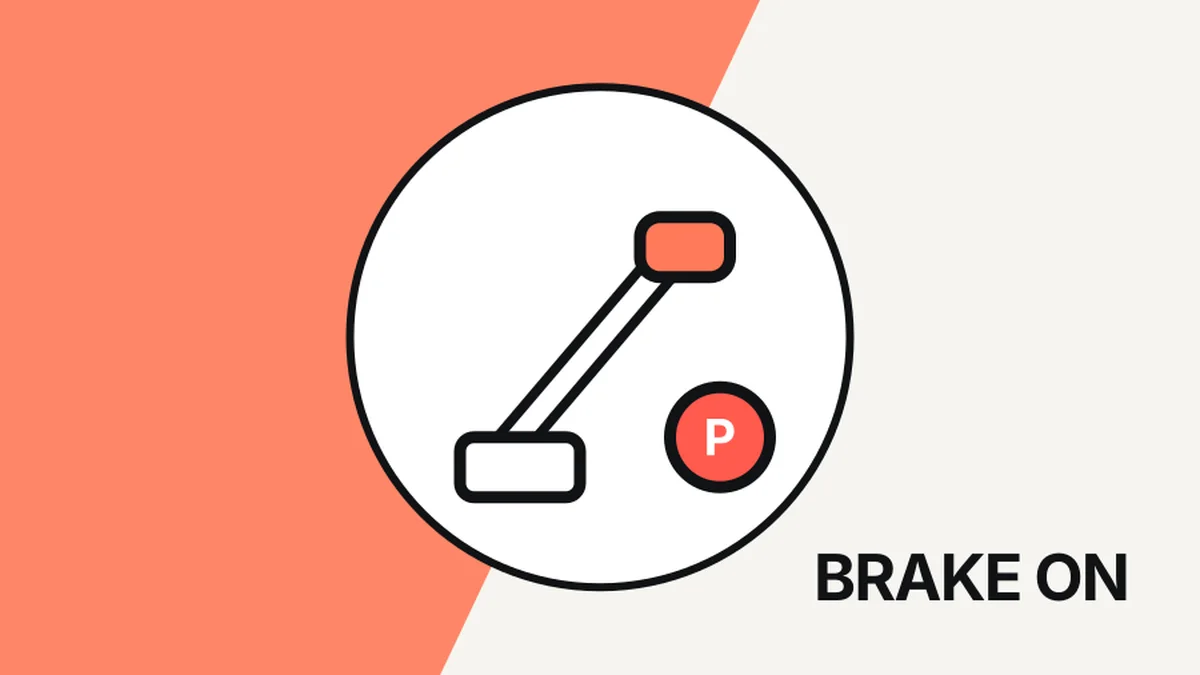
Illustration of a pulled-up parking brake lever with a red P warning light
Illustration: whid
Damage scale 3/5 Costly
How fastMinutes
Can you undo it?Usually, if caught early
Typical cost$0–$800+

The short answer

The rear brakes drag and heat up, and the longer and faster you drive, the more damage you do. A few hundred yards at low speed rarely causes harm. Several miles, especially at highway speed, can glaze the pads or shoes, warp rotors or drums and, in the worst case, overheat the brake fluid so the whole braking system loses strength. A burning smell or a soft pedal means you should stop and let everything cool.

On this page 13 sections
  1. Step by step
  2. What the parking brake actually does
  3. Short distances: usually just a smell
  4. Longer drives: glazing, warping and fade
  5. What to do right now
  6. Does it matter what kind of car you have?
  7. What repairs can cost
  8. How to stop it happening again
  9. How far did you drive?
  10. What to do now
  11. Myth vs fact
  12. Reader stories
  13. Quick questions

01 What happens, step by step

  1. First seconds

    Drag at the rear wheels

    The car feels sluggish. The brake warning light is on.

  2. First mile

    Heat and a burning smell

    Pads or shoes heat up fast. Short trips usually cause only minor wear.

  3. Several miles

    Glazing and warping

    Friction material hardens. Rotors and drums can distort or discolor.

  4. Long or fast drive

    Brake fluid can boil

    Vapor in the fluid makes the pedal soft and weakens all four brakes.

It happens to careful drivers too. You are in a hurry, the car feels a little sluggish, there is a faint smell you blame on the car ahead, and then you notice the brake warning light glowing on the dash. The parking brake has been on the whole time.

How worried you should be depends on three things: how far you drove, how fast, and how hard the brake was applied. A lever pulled up only a couple of clicks drags lightly. One pulled up all the way is close to holding the rear wheels.
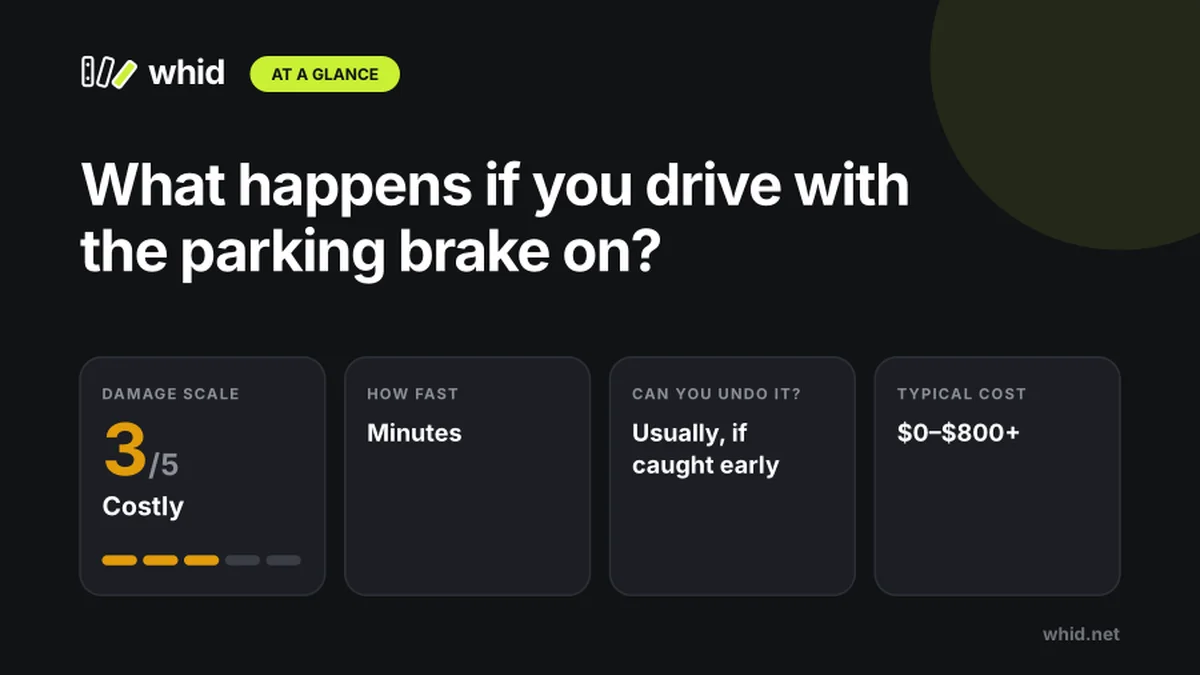
At a glance: What happens if you drive with the parking brake on? Damage scale 3/5 (Costly); how fast: Minutes; typical cost: $0–$800+.
At a glance: the damage rating, how fast it happens, whether it can be undone and what it usually costs.

What the parking brake actually does

On most cars the parking brake works only on the rear wheels, through a cable that is separate from the hydraulic system your brake pedal uses. Depending on the car, it pushes the rear disc pads against the rotors, presses shoes inside a small drum built into the rear rotor, or presses shoes against a full rear drum. Many newer cars have an electronic parking brake that uses a motor at the rear caliper instead of a cable.
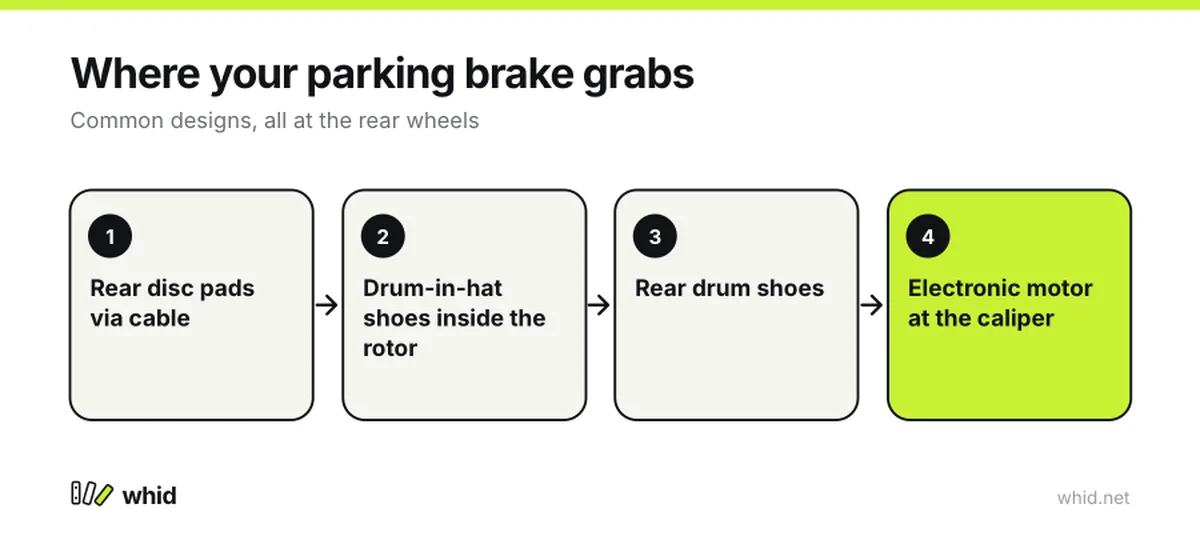
Four parking brake designs: rear disc pads, drum-in-hat shoes, rear drum shoes and electronic parking brakes
Each one turns forward motion into heat at the rear wheels.

None of these designs is meant to stop a moving car repeatedly. They are built to hold a parked one. When you drive with one engaged, all the energy of pushing the car forward against that friction turns into heat at the rear wheels.

Short distances: usually just a smell

If you went a short way at parking-lot or city speeds, the most likely result is a burning smell and some extra wear on the rear pads or shoes. The friction material can handle short bursts of heat; that is its job. Once it cools, braking usually feels normal and there is nothing more to do than keep an ear out for new noises.
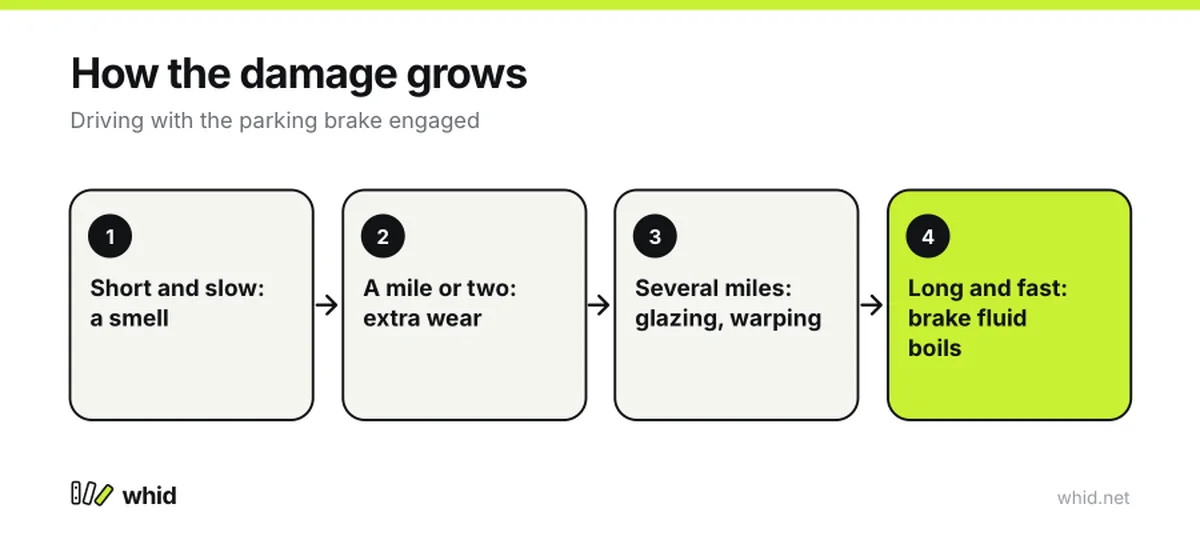
Four steps of parking brake damage from a burning smell to boiled brake fluid
Distance and speed matter more than anything else.

Longer drives: glazing, warping and fade

The real damage comes with distance and speed. As heat builds, the surface of the pads or shoes can glaze, turning hard and shiny so it grips poorly afterwards. Rotors and drums can overheat unevenly, leaving hot spots, blue discoloration or distortion that shows up later as a pulsing pedal or a shudder when you stop. Drums can even crack.

The more serious risk is to the brake fluid. The rear brakes share fluid with the front ones. If the rear calipers or wheel cylinders get hot enough, the fluid near them can boil and form vapor bubbles. Vapor compresses where fluid does not, so the pedal goes soft and stopping power drops for the whole car. This is brake fade, and it is the reason a long drive with the parking brake on deserves a proper inspection rather than a shrug.

There is also wear outside the brakes themselves. Dragging brakes cost fuel, strain the drivetrain a little and can stretch the parking brake cable so it holds poorly afterwards.

What to do right now

Release the brake as soon as you notice it, then find a safe place to pull over. Do not put the parking brake back on while the rear brakes are very hot if you can safely avoid it, because pressing hot pads against a hot rotor can leave deposits or uneven spots; on a flat surface, park in gear or in Park instead. Do not touch the wheels, which can be hot enough to burn. Give everything 30 to 60 minutes to cool.

Then test gently. Drive slowly in a quiet area and brake a few times. Things to note: a pedal that sinks lower or feels spongy, the car pulling to one side, grinding or squealing, a vibration through the pedal, or a burning smell that keeps coming back. Any of those means a shop should look at the brakes before you drive normally again.
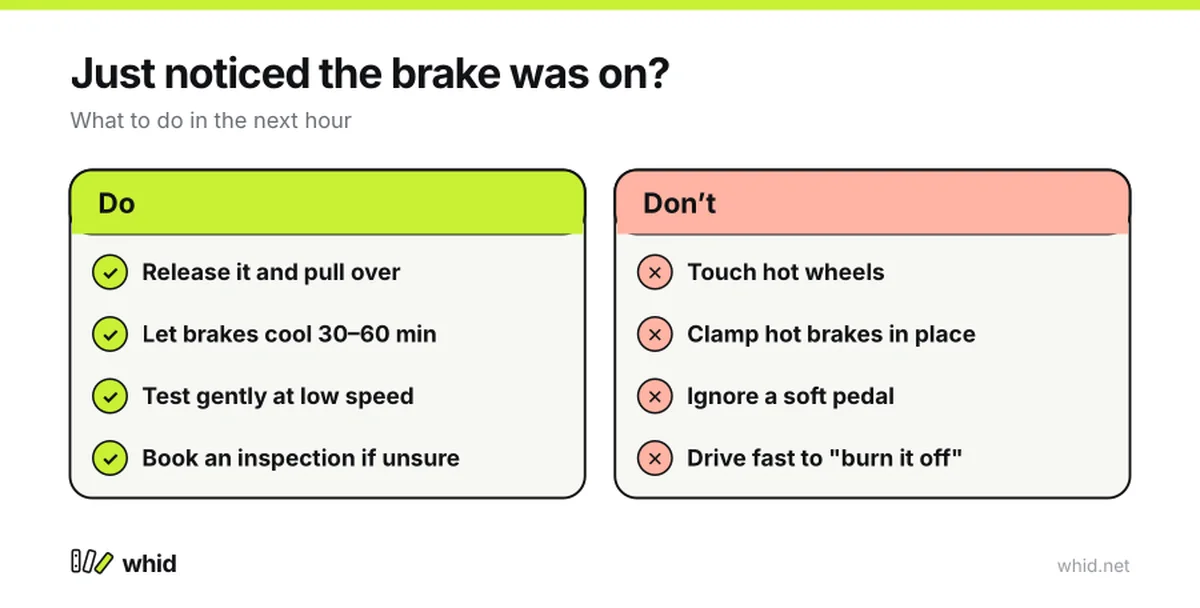
Do and don't list after driving with the parking brake on
A soft or sinking pedal is the one sign never to ignore.

Does it matter what kind of car you have?

A little. Cars with rear drum brakes or a drum-in-hat design use shoes for the parking brake, and shoes trap heat inside the drum, so they can glaze quickly and drums can crack if they get very hot. Cars where the parking brake clamps the main rear disc pads share that heat with the same pads you use for normal braking, so damage shows up directly in everyday stopping.

Heavier vehicles and anything towing a trailer build heat faster, because there is more weight to drag. Electric and hybrid cars use regenerative braking for much of their slowing, so their friction brakes see less use day to day; that does not protect them from a dragging parking brake, though, and their brakes may sit unused long enough for a glazed surface to go unnoticed.

What repairs can cost

If the drive was long enough to cause damage, the usual repair is new rear pads or shoes, often with new rotors or drums, plus a brake fluid flush if the fluid overheated. A seized caliper or a stretched parking brake cable adds to the bill. Exact prices vary widely by car and region, so treat any estimate as a starting point and ask the shop to show you the damaged parts.

How to stop it happening again

Make releasing the parking brake part of the same habit as fastening your seatbelt. Watch for the brake warning light, which on most cars stays on while the parking brake is set. Some cars chime if you drive off with it engaged, and many electronic parking brakes release automatically when you press the accelerator with the seatbelt fastened. If the warning light ever stays on after you have released the brake, have it checked, because the same light also warns of low brake fluid.

02 How far did you drive?

General guide only. Any change in braking feel means an inspection.

How far and fastLikely resultWhat to checkNext step
Parking lot, a few hundred yardsLittle or no damageNothing unusual after coolingCarry on
A mile or two in townExtra pad or shoe wear, smellNoise, pullingListen for a week
Several miles at speedGlazed pads, hot rotorsVibration, soft pedalBrake inspection
Long highway drive, smokePossible boiled fluid, warped partsPedal feel, fluidInspection before normal driving

03 What to do right now

  1. Release and pull over safely Then let the brakes cool for 30 to 60 minutes.
  2. Avoid clamping hot brakes On flat ground, park in gear or Park instead of reapplying the parking brake.
  3. Test at low speed Feel for a soft pedal, pulling, vibration or grinding.
  4. Get an inspection if in doubt Glazing, warping and overheated fluid are not always obvious.

04 Myth vs fact

Myth The parking brake only affects the parking brake.

Fact On most cars it uses the rear brakes, which share fluid with the front ones.

Myth If it still stops, there is no damage.

Fact Glazing and warping often show up days later as noise or vibration.

Myth Electronic parking brakes can't be driven on.

Fact Many release automatically, but some can be overridden or fault.

05 Has this happened to you?

Real experiences from readers. Stories are checked by an editor before they appear and are not professional advice.

No reader stories yet — be the first to share yours.

Share what happened to you

By sending, you agree that we may publish your story (first name and location only). See our privacy policy.

06 Quick questions

How far can you drive with the parking brake on before damage?

A short distance at low speed is usually fine. Several miles, especially at highway speed, can glaze pads and warp rotors.

Why does my car smell like burning after driving with the parking brake on?

The rear pads or shoes overheated. Let them cool and test the brakes gently.

Can driving with the parking brake on cause brake failure?

Yes. If the brake fluid boils, the pedal goes soft and braking weakens on all wheels.

Do I need new brakes after driving with the parking brake on?

Not always. If braking feels normal after cooling and there is no noise or vibration, it may be fine.

Sources

  1. NAPA Know How – Drove with the parking brake on accidentally
  2. Kia Owner's Manual – Good braking practices
  3. Jalopnik – What happens if you drive with the parking brake on
  4. Rick's Free Auto Repair Advice – What to do after driving with the parking brake on

General information only. Laws, prices and procedures vary by location and change over time — check with a qualified professional for your situation. Full disclaimer.