Topping up oil feels like the responsible thing to do, so a little extra seems harmless. Most of the time it is. But engines are designed around a specific oil level, and the space between the full mark and the spinning parts above it is smaller than most people imagine.
Overfilling usually happens in one of three ways: someone adds a full quart when the engine only needed half, a quick-lube shop pours in the wrong amount, or the level is checked right after the engine was running, when much of the oil is still up in the engine and the dipstick reads low.
How much is too much?
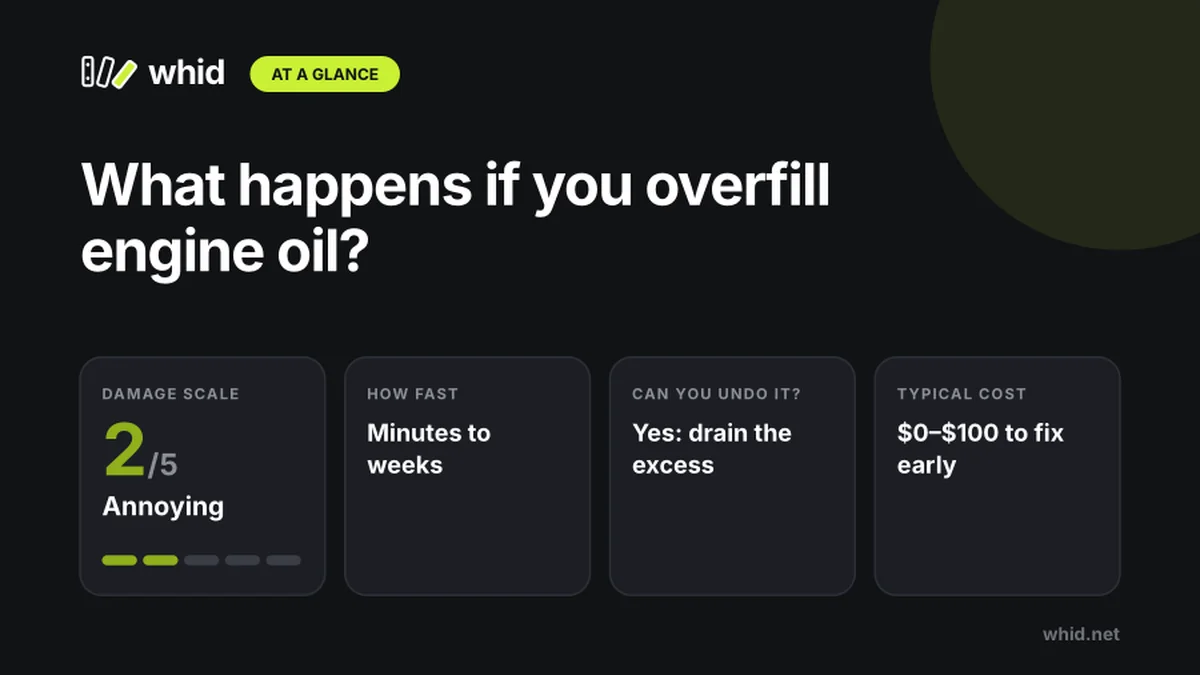
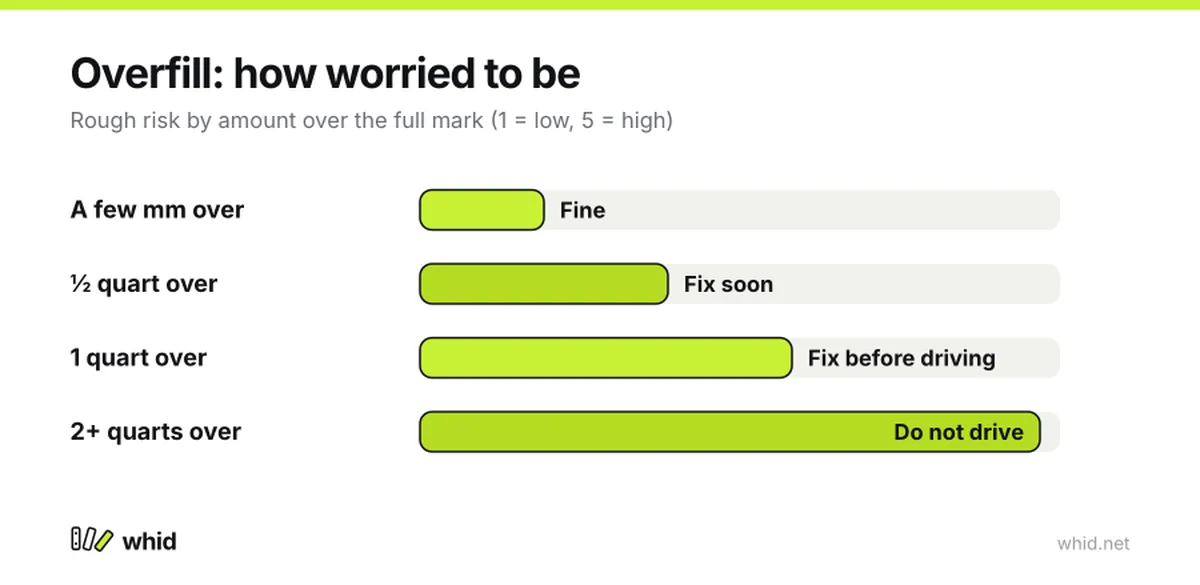
On most cars the gap between the low and full marks on the dipstick represents about one quart, though it varies by engine. A level a few millimeters above full is common and rarely matters. Half a quart over is worth fixing soon. A full quart or more over is worth fixing before the car is driven any real distance, and two or more quarts over is a reason not to drive it at all until it is corrected.
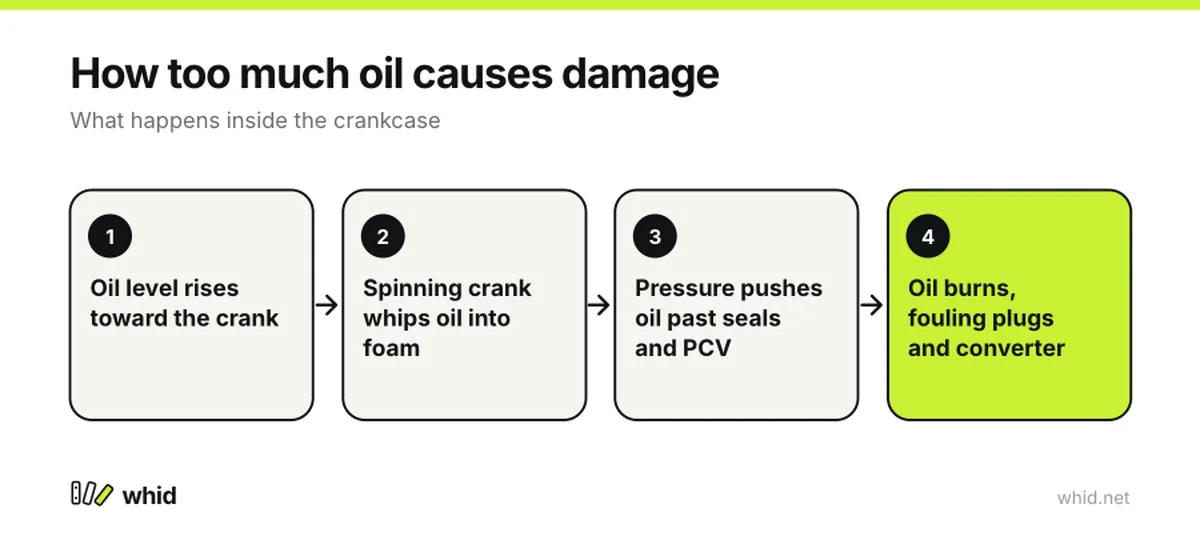
The reason the line matters is the crankshaft. It spins in the bottom of the engine, just above the oil in the pan, thousands of times a minute. With the right amount of oil, there is a gap. With far too much, the crankshaft and connecting rods start to dip into the oil.
What foamy oil does
When the rotating assembly slaps through the oil, it beats air into it, much like a whisk in cream. Foamy, aerated oil is a poor lubricant. The oil pump is built to move liquid, and bubbles compress, so oil pressure can fluctuate and bearings may not get the steady film they need. Aerated oil also carries heat away less effectively and breaks down faster.
You might never see this from the driver's seat, which is why the dipstick matters more than how the car feels. In severe cases a low oil pressure warning light flickers on, especially in hard corners or under acceleration.
Where the extra oil goes
An overfilled crankcase also raises pressure inside the engine. That can push oil past seals and gaskets, leading to leaks at the front or rear main seal or the valve cover. Some of it gets drawn through the positive crankcase ventilation system into the intake, where it burns in the cylinders.
That burning oil is the part that gets expensive. It shows up as blue-gray exhaust smoke and a burning smell, it can foul spark plugs and cause a rough idle or misfires, and over time it can damage the catalytic converter, which is one of the costlier parts on a car. Turbocharged engines and engines with tight tolerances are generally less forgiving.
How to check the level properly
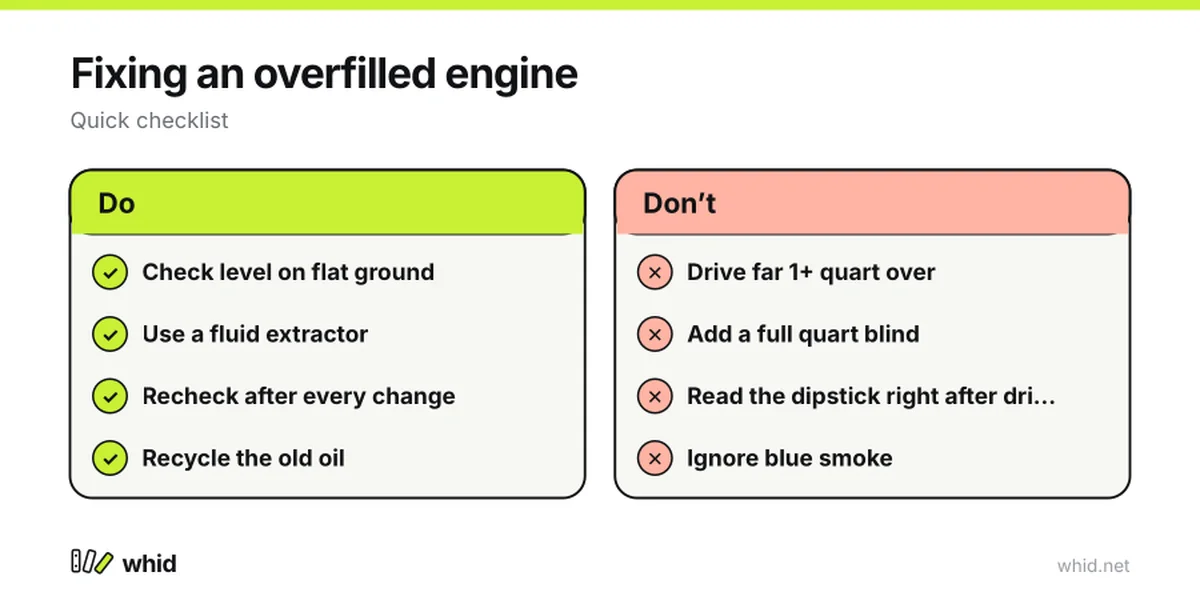
Park on level ground and wait. Most manufacturers say to check with the engine off after a few minutes so oil can drain back into the pan; some want it warm, some cold, so the owner's manual is the final word. Pull the dipstick, wipe it, push it fully back in, then pull it again and read the level. Do it twice to be sure. Some newer cars have no dipstick and show the level on the dashboard after a measurement cycle instead.
How to remove the excess
There are two easy routes. The first is to loosen the drain plug under the car just enough to let a slow stream out into a pan, then tighten it again, checking the dipstick as you go. It works, but it is messy and hot oil burns. The second is a fluid extractor, a hand pump with a thin tube you feed down the dipstick tube. It costs about the same as a tank of gas, and it lets you take out exactly what you need without going under the car.
If a shop overfilled it, go back and ask them to correct it. Any reputable shop will do so for free. Keep the old oil for recycling; most auto parts stores accept used oil.
Why it happens after oil changes
Many overfills are not a single big mistake but two small ones. A shop or a DIY change uses the capacity from a generic chart instead of the exact figure for the engine, or adds the full listed capacity even though some old oil stayed trapped in the engine. Then the driver tops up again a week later because the level looked low when checked on a slope or right after a drive.
The fix is simple discipline. Look up the exact capacity with the filter change in the owner's manual, pour in about half a quart less than that figure, run the engine for a minute, wait, and then top up in small steps while checking the dipstick. Write the date and mileage of the change somewhere you will see it, so you are not tempted to add oil the car does not need.
What to watch afterwards
If the car was driven a long way badly overfilled, keep an eye on it for the next few weeks. Signs worth a mechanic's attention are blue smoke at start-up or under acceleration, oil spots under the car, a check engine light for misfires or the catalytic converter, and oil consumption that is suddenly higher than before. Caught early, overfilled oil is a ten-minute fix. Left alone, it can turn a routine top-up into a much larger bill.