The furnace filter is one of those parts nobody thinks about until something goes wrong. It sits in a slot by the furnace or behind a return grille in a wall or ceiling, quietly catching dust, pet hair and lint before air reaches the blower. Every bit it catches stays there. A filter that went in last spring and never came out has been working against your system for months.
The trouble is that nothing dramatic happens at first. The heat still comes on and the house still warms up. What changes is how hard the system has to work to get there.
Step one: the air stops moving freely
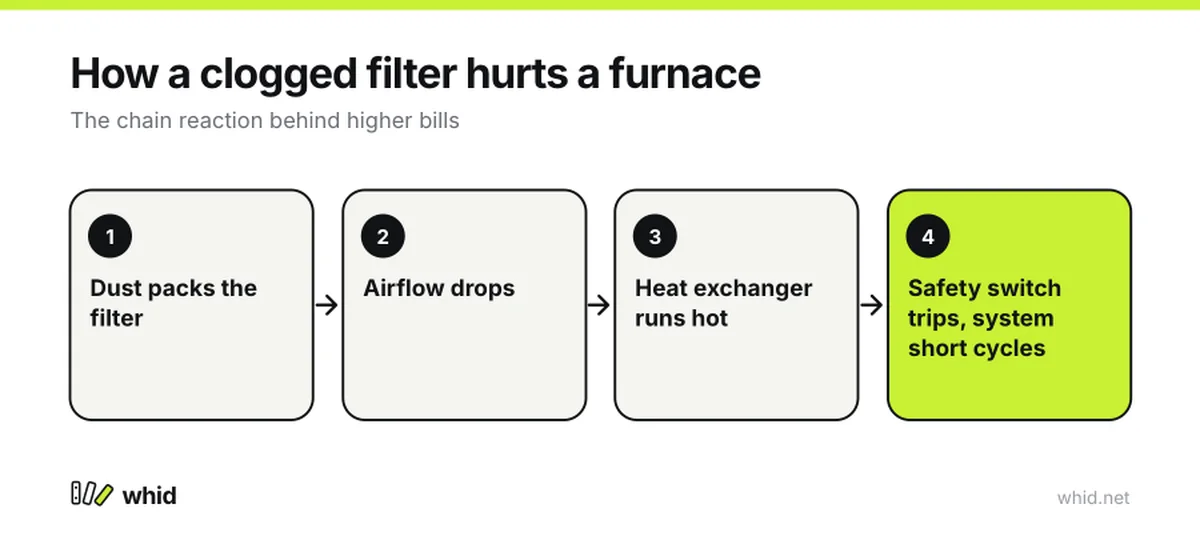
A furnace is designed around a certain amount of airflow. As a filter loads up with dust, it starts to act like a hand over the intake. The blower moves less air, so the furnace takes longer to deliver the same heat, and in summer the air conditioner takes longer to cool. Longer run times mean more electricity for the blower and more gas or electric heat for the same comfort.
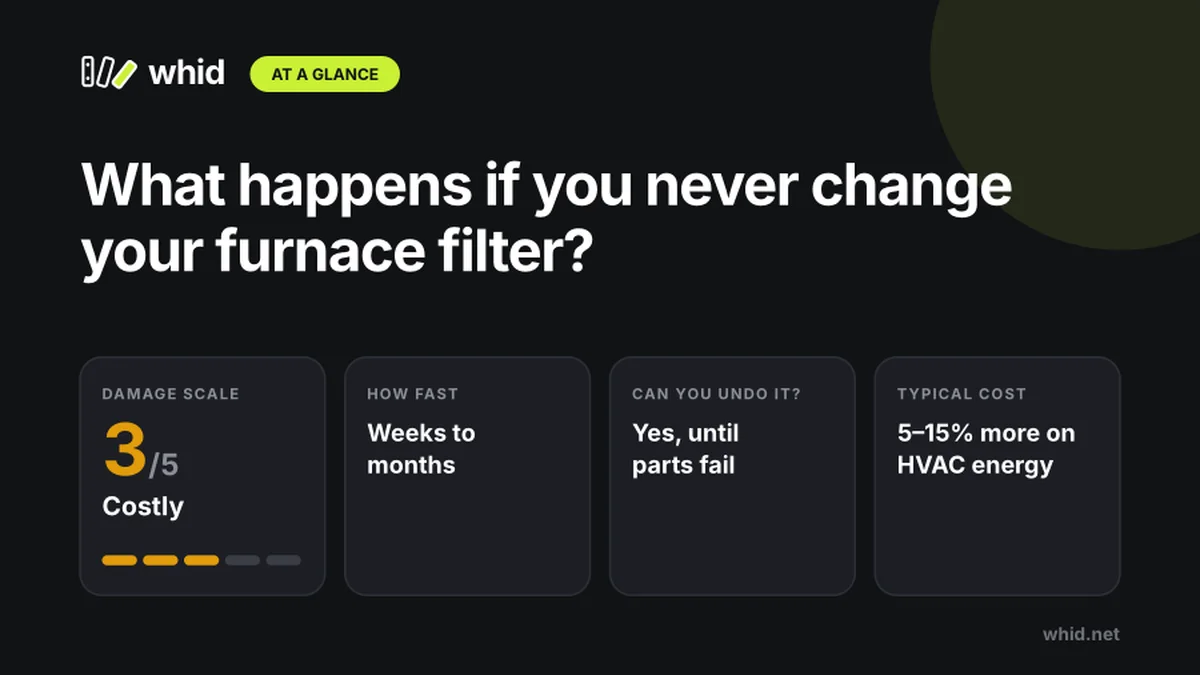
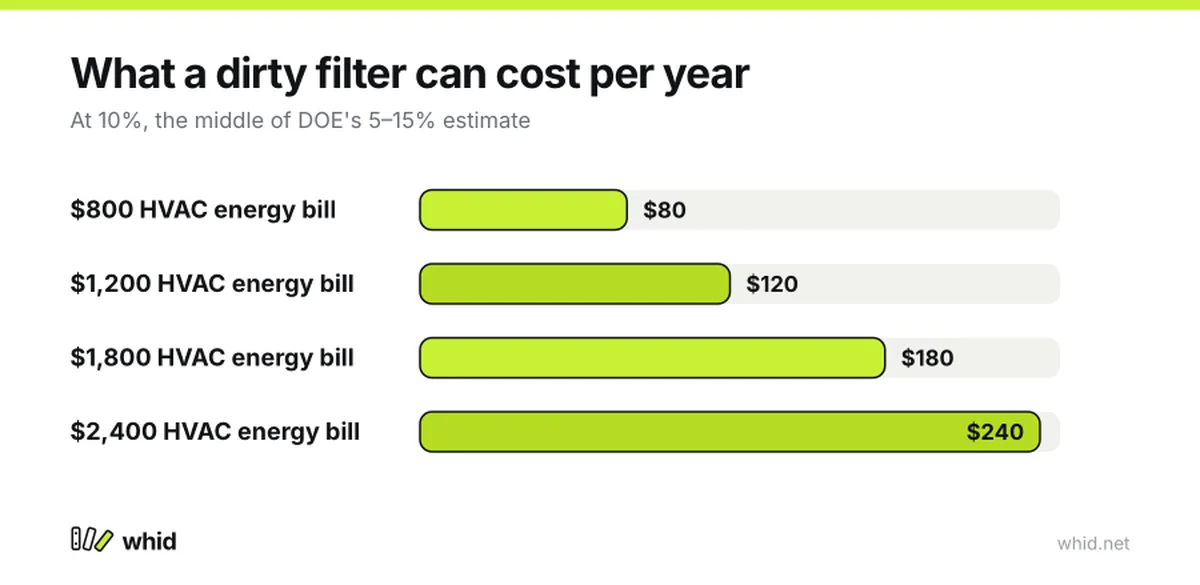
That is where the Department of Energy's estimate comes from: swapping a dirty filter for a clean one can lower heating and cooling energy use by 5% to 15%. In a home that spends $1,200 a year on heating and cooling, that is roughly $60 to $180, many times the cost of a year of filters.
Step two: the furnace starts to overheat
Inside a gas furnace, the heat exchanger needs a steady flow of air across it to carry heat away. With too little air, it gets hotter than it should. Furnaces have a safety called a high-limit switch that shuts the burners off when that happens. The blower keeps running, things cool down, and the burners fire again. This on-off pattern, called short cycling, is hard on the equipment and leaves rooms feeling unevenly warm.
Repeated overheating is one of the stresses that can crack a heat exchanger over the long term. A cracked heat exchanger usually means replacing the furnace, and in some cases it can let combustion gases into the airflow. That is one reason every home with a fuel-burning furnace should have working carbon monoxide alarms, whatever the state of the filter.
In summer: a frozen air conditioner
The same filter serves the air conditioner. With too little warm air moving over the indoor evaporator coil, the coil gets cold enough for moisture on it to freeze. Ice spreads across the coil and blocks even more air. You notice weak airflow, warm air from the vents, or water around the indoor unit when the ice melts. If it keeps happening, the compressor outside is working in conditions it was not designed for.
What happens to the air you breathe
A packed filter does not get better at filtering. Once it is overloaded, air takes the easiest path, which can mean around the edges of the filter or through gaps where the cardboard frame has bent. In bad cases the filter collapses or gets pulled into the blower compartment. Dust that would have been caught ends up on the blower wheel and the coil, which lowers efficiency further, and some of it ends up back in your rooms. People with allergies often notice first.
Signs your filter is overdue
You do not always need to pull the filter to suspect it is clogged. A furnace that runs for long stretches without the house getting much warmer is one hint. So is weaker airflow from the vents, a whistling sound at the return grille, or more dust settling on furniture than usual. In summer, condensation or ice on the copper line running to the indoor coil is a classic sign of low airflow.
Some newer thermostats show a filter reminder based on run time, and a few smart systems even estimate filter pressure. They are useful nudges, but they guess. A quick look at the filter itself is still the most reliable check, and it takes less time than reading the thermostat menu.
How often to change it
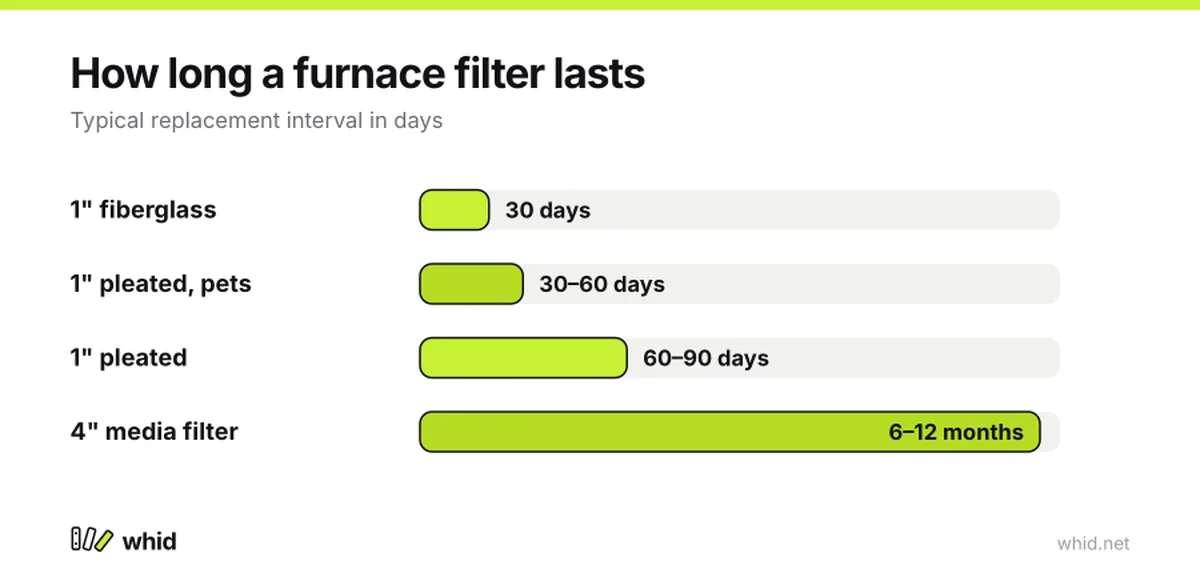
ENERGY STAR's rule of thumb is to check the filter every month, especially during heavy winter and summer use, and replace it at least every three months. The right interval depends on the filter and the house. Thin fiberglass filters may need changing monthly. Standard 1-inch pleated filters usually last 60 to 90 days. Homes with pets, smokers, construction dust or allergy sufferers should change them more often. Thick 4- or 5-inch media filters can last six months to a year.
The easiest test is visual: hold the filter up to a light. If you cannot see light through the media, it is done. Write the date on the frame when you install a new one, and buy filters in a multipack so a replacement is always on the shelf.
When you buy, match the size printed on the old filter's frame exactly and point the arrow toward the furnace. A higher MERV rating catches finer particles, but a very dense filter in a system not designed for it can restrict airflow almost as much as a dirty one. If you are unsure, MERV 8 to 11 is a common middle ground for homes.