whid

What happens if you put the wrong salt in your water softener?

Table salt, rock salt, ice melt and pool salt each fail in a different way. What each one does inside the brine tank, how fast, and how to clean up if you already poured it in.

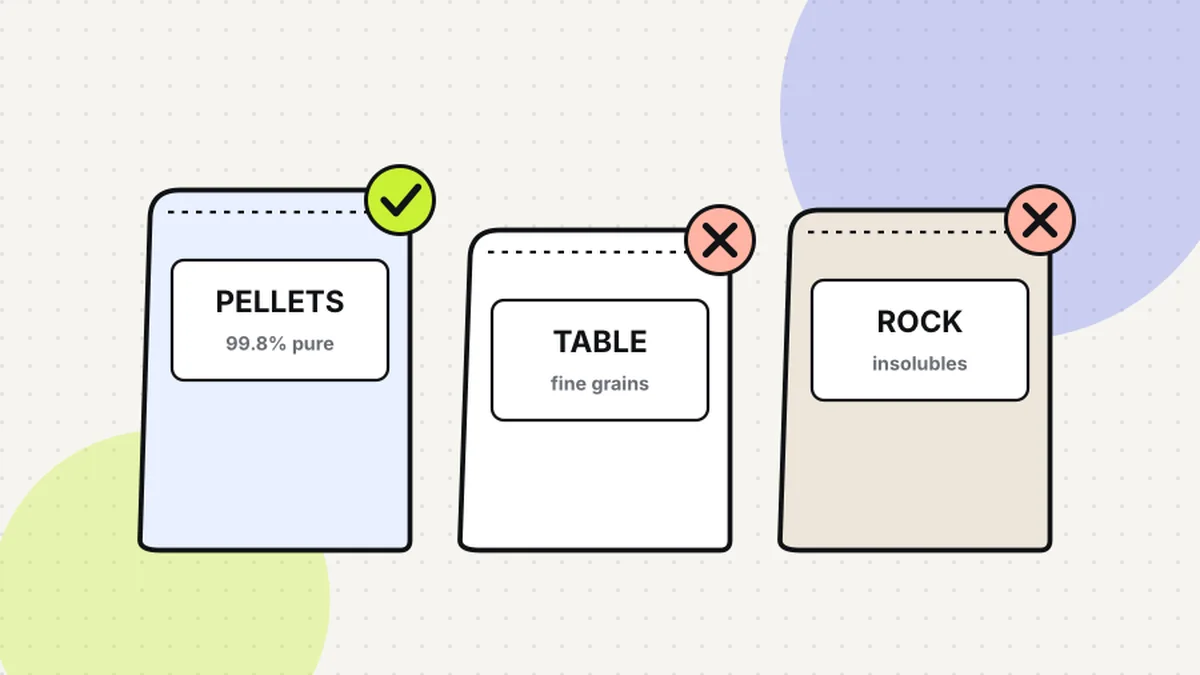
Three salt bags: softener pellets marked with a check, table salt and rock salt marked with a cross
Illustration: whid
Damage scale 2/5 Annoying
How fastWeeks to months
Can you undo it?Yes: clean out the tank
Typical cost$0–$150 for a clean-out

The short answer

Usually nothing breaks right away, but the tank slowly clogs. Table salt packs into a paste, rock salt leaves dirt and sludge, and ice melt that contains calcium chloride can actually make your water harder. Potassium chloride is fine if you raise the hardness setting. If you already used the wrong salt, scoop it out, clean the brine tank and refill with softener pellets or solar crystals.

On this page 12 sections
  1. Step by step
  2. Table salt: the mushing problem
  3. Rock salt: it works, but it leaves dirt behind
  4. Ice melt and pool salt: two very different risks
  5. Potassium chloride: right salt, different setting
  6. Buying the right bag next time
  7. If you already put the wrong salt in
  8. Salts people put in softeners, compared
  9. What to do now
  10. Myth vs fact
  11. Reader stories
  12. Quick questions

01 What happens, step by step

  1. Day 1

    The wrong salt goes in

    It dissolves like normal salt at first. Nothing looks different.

  2. Weeks 1–3

    Fine salt starts to pack

    Table or pool salt settles into a dense layer. Rock salt starts leaving grit.

  3. Month 1–2

    Weak brine, hard water

    Mush or a bridge blocks the brine. The softener cycles but softens poorly.

  4. Month 3+

    Clean-out time

    Sludge reaches the brine well and injector. The tank needs emptying and scrubbing.

It usually happens on a Sunday. The softener is empty, the store is closed, and there is a three-pound box of table salt in the pantry or a bag of ice melt in the garage. Salt is salt, so why not? The honest answer is that most wrong salts will not hurt the softener on the first day. The trouble is slower and messier than that, and it depends a lot on which salt you grabbed.

Softeners are built around one assumption: the salt will dissolve evenly into brine and leave almost nothing behind. Softener pellets and solar crystals are made for exactly that. Most are 99.5% to 99.8% pure sodium chloride, shaped in large pieces so water can move between them. Change either of those things, the purity or the size, and the brine tank stops behaving.

At a glance: What happens if you put the wrong salt in your water softener? Damage scale 2/5 (Annoying); how fast: Weeks to months; typical cost: $0–$150 for a clean-out.
At a glance: the damage rating, how fast it happens, whether it can be undone and what it usually costs.

Table salt: the mushing problem

Table salt is very pure, so impurities are not the issue. Grain size is. Fine grains pack tightly, dissolve fast and then settle into a dense layer at the bottom of the tank. Over a few weeks that layer turns into a paste the industry calls mush. Water cannot flow through it properly, so the softener draws weak brine or none at all, and you get hard water from a tank that is visibly full of salt.

Iodized table salt also carries small amounts of potassium iodide, a stabilizer and an anti-caking agent such as calcium silicate. None of that is useful in a brine tank, and the anti-caking agent does not dissolve. In practice a small box poured onto a bed of normal pellets is a minor problem. Filling the tank with it is a clean-out waiting to happen.
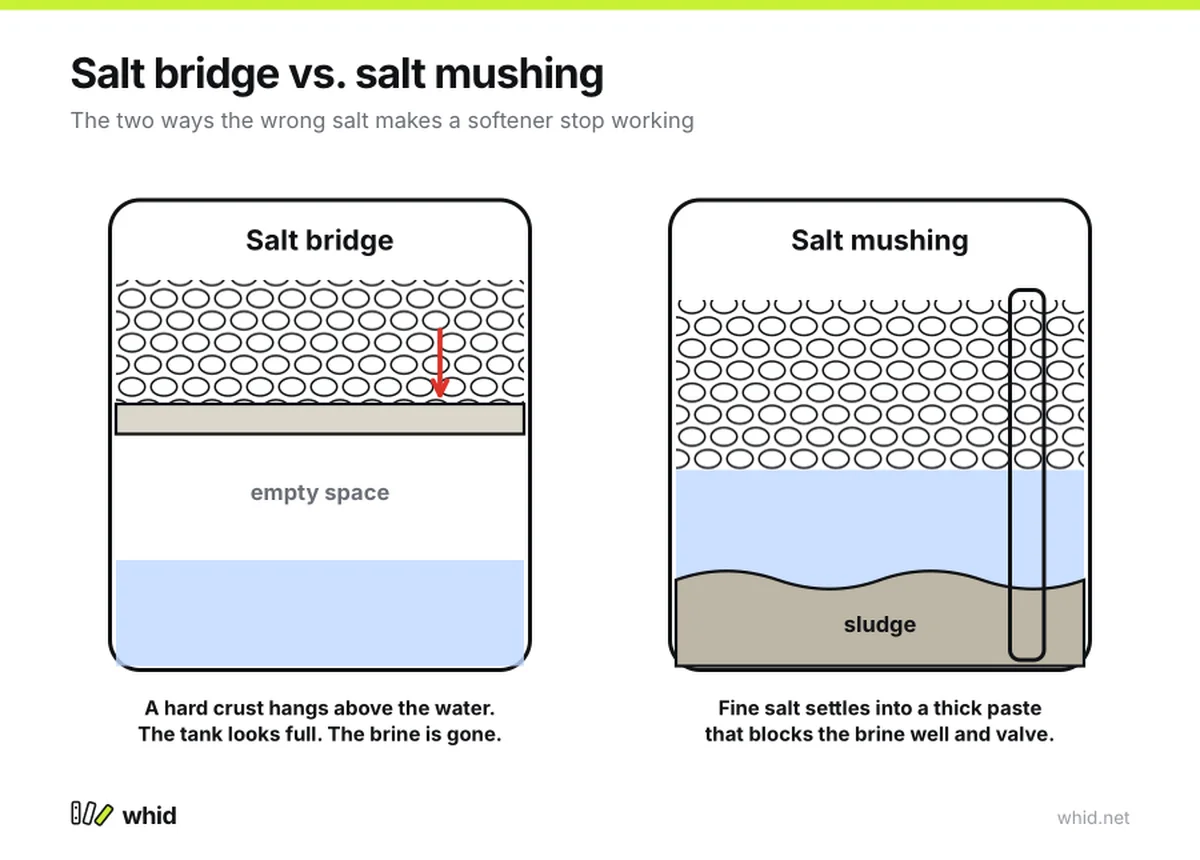
Two brine tank cross-sections: a salt bridge with an empty gap below a crust, and salt mushing with sludge at the bottom
Both problems give you hard water from a tank that still looks full of salt.

Rock salt: it works, but it leaves dirt behind

Rock salt is mined and sold with little processing. Salt producer Cargill puts its purity at about 95% to just over 98.5%. It will soften water, and some people use it to save money, but the part that is not salt has to go somewhere. Most of it ends up as grit and sludge on the floor of the brine tank, where it can foul the brine well screen and the injector.

The numbers are small per bag but they add up. Every 1% of impurity in a 40-pound bag is 0.4 pounds of material that is not salt. Over a year of monthly bags, rock salt can leave several pounds of residue in a tank that would hold almost none with pellets. That is why Cargill says rock salt only makes sense if you are willing to clean the brine tank regularly.
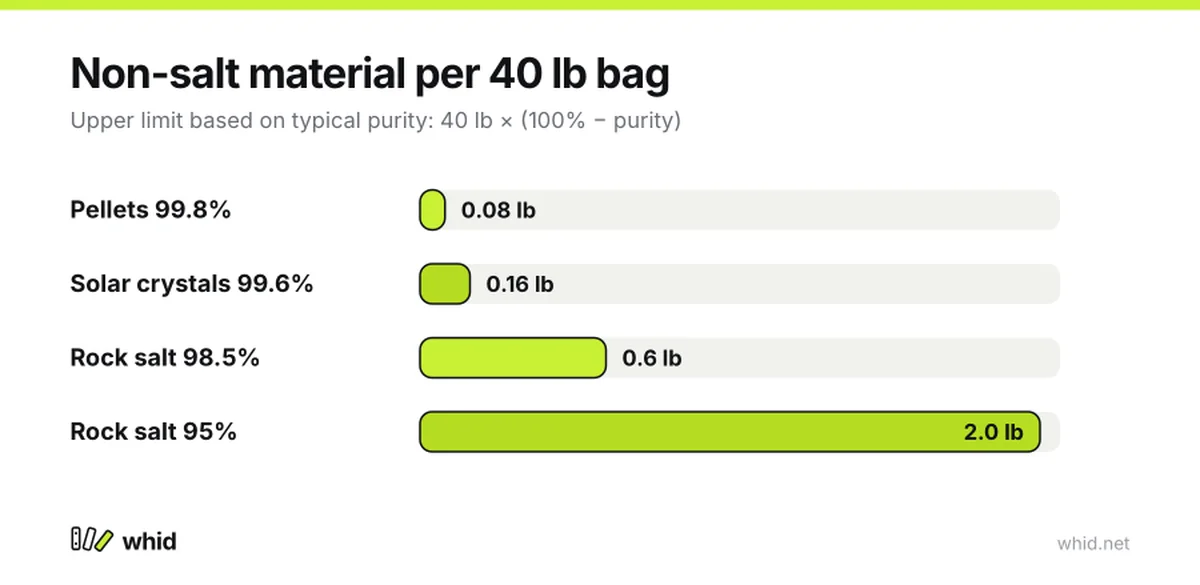
Bar chart: a 40 lb bag of pellets has about 0.08 lb of non-salt material, solar crystals 0.16 lb, rock salt 0.6 to 2 lb
Our calculation from published purity figures. Not every impurity is insoluble, so treat these as maximums.

Ice melt and pool salt: two very different risks

Ice melt is the worst choice on this list, and the reason is chemistry, not dirt. Many ice melt blends contain calcium chloride or magnesium chloride. Those are the very minerals a softener exists to remove. Put calcium chloride brine through the resin and the beads load up with calcium during the cycle meant to clean them. Your softener can come out of that regeneration producing water harder than before. Many blends also contain dyes and other additives you do not want near a water system.

Pool salt is less dramatic. It is often high-purity sodium chloride, but it is usually a fine granulated product, so it can mush like table salt. Several softener makers, including Morton's softener line, list it among salts to avoid.

Potassium chloride: right salt, different setting

Potassium chloride is the one substitute manufacturers actually approve. It is the choice for people who want to keep sodium out of softened water. It is not as efficient at recharging resin, so you need more of it. GE Appliances recommends setting the hardness about 20% higher, and Kenmore says 25% if the unit has no potassium setting. Mixing the two salts in one tank does no harm. The main downside is price: it often costs several times as much per bag.

Buying the right bag next time

Look for the words water softener on the bag, not just salt. Pellets made from evaporated salt are the most consistent choice and leave the least residue. Solar crystals cost a little less and work well in most units, though they can bridge more readily in humid rooms. Block salt is only for softeners designed to take blocks, so check before you buy it.

If you have iron in your water, a product with an added iron-removal agent can help keep rust off the resin. And if you are not sure what your softener accepts, the manual or the label on the control valve almost always lists approved salts. It takes a minute to check and saves an afternoon with a bucket.
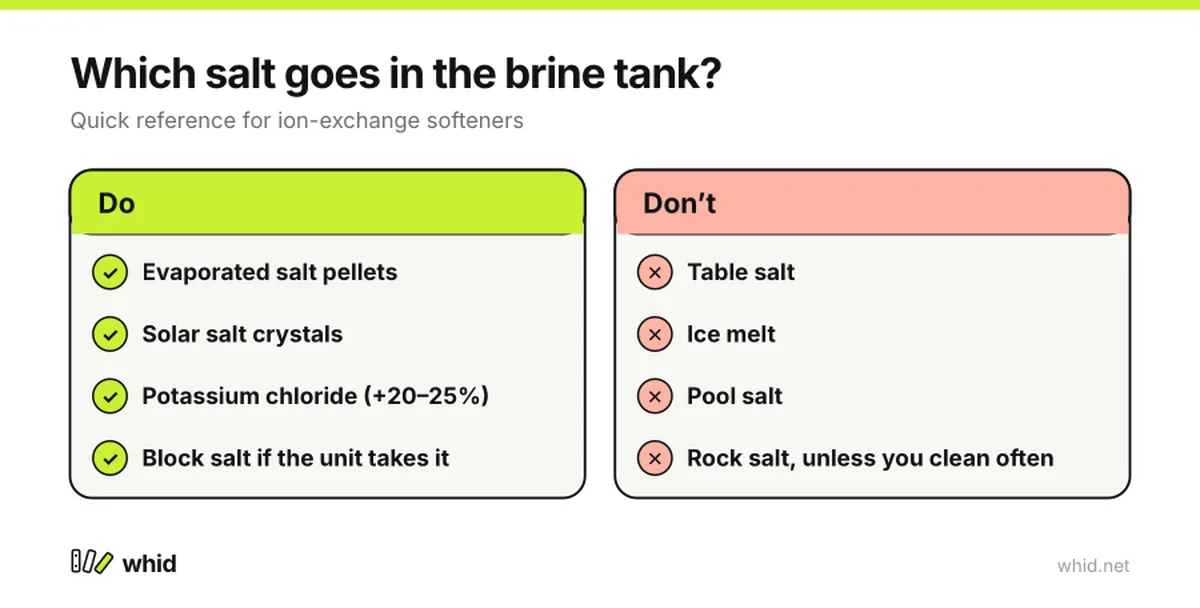
Do and don't chart: use pellets, solar crystals or potassium chloride; avoid table salt, ice melt, pool salt and rock salt
The right salt is large, pure and made for softeners.

If you already put the wrong salt in

For a small amount of table salt or pool salt on top of normal pellets, keep an eye on it. Push a broom handle down every couple of weeks and feel for a soft paste at the bottom. If you used ice melt or filled the tank with the wrong product, clean it out now rather than later.

A clean-out is a messy afternoon, not a repair. Put the softener in bypass, scoop out the salt, drain or bail the water, and lift out the brine well cover if your tank has one. Scrub the tank with water and a little dish soap, rinse it well, and refill with a few inches of clean water and proper softener salt. After ice melt, run two or three regenerations with good salt to strip the calcium from the resin before you judge the result. If the water is still hard after that, a water treatment technician can check the injector, which is where sludge likes to settle.

02 Salts people put in softeners, compared

Purity figures are typical values published by salt producers. Check your manual for approved products.

SaltTypical purityWorks in a softener?Main risk
Evaporated pellets99.8%Yes, preferredAlmost none
Solar crystals99.6%YesSmall amount of residue
Potassium chloride99%+Yes, raise setting 20–25%Higher cost
Rock salt95–98.5%Yes, with regular clean-outsSludge and grit
Table saltVery highNot recommendedMushing
Pool saltHighNot recommendedMushing
Ice meltVariesNoCalcium and magnesium salts reload the resin

03 What to do right now

  1. Stop adding the wrong salt If the tank is half table salt, do not top it up with more. Switch to pellets or solar crystals.
  2. Probe for mush Push a broom handle down to the bottom. A soft, paste-like layer means it is time to clean.
  3. Clean out after ice melt Empty and scrub the tank, refill with softener salt and run two or three regenerations.
  4. Adjust for potassium Using potassium chloride? Raise the hardness setting by 20–25% or pick the KCl option.

04 Myth vs fact

Myth Salt is salt.

Fact Grain size and purity decide whether brine forms properly. Fine or impure salt clogs the tank.

Myth Rock salt will damage the resin.

Fact The resin is fine. The problem is insoluble grit in the brine tank and injector.

Myth Ice melt is just cheap salt.

Fact Many blends contain calcium or magnesium chloride, which load hardness back onto the resin.

05 Has this happened to you?

Real experiences from readers. Stories are checked by an editor before they appear and are not professional advice.

No reader stories yet — be the first to share yours.

Share what happened to you

By sending, you agree that we may publish your story (first name and location only). See our privacy policy.

06 Quick questions

Can I use table salt in a water softener in an emergency?

A small box on top of normal pellets will not cause lasting harm. Do not fill the tank with it, because fine salt packs into mush.

Is it OK to mix salt brands or types?

Mixing pellets and crystals, or sodium and potassium chloride, is fine. Avoid mixing in rock salt if you do not plan regular clean-outs.

How do I know if my tank has salt mushing?

Hard water from a tank that looks full, water standing high in the tank, and a soft paste at the bottom when you probe it.

How often should a brine tank be cleaned?

With good pellets, once a year or less is common. With rock salt, plan on several times a year.

Sources

  1. GE Appliances – Water softener salt type
  2. GE Appliances – Using potassium chloride
  3. Cargill – Water softener salt FAQ
  4. Cargill – Food salt FAQ (purity of salt types)
  5. Morton – Salts not recommended for softeners

General information only. Laws, prices and procedures vary by location and change over time — check with a qualified professional for your situation. Full disclaimer.