Generations of kids were warned that swallowed gum sits in your stomach for seven years. It is one of the most repeated food myths in the English-speaking world — and it is simply not true. Your body is very good at getting rid of things it can't use, and gum is one of them.
What chewing gum is made of
Modern chewing gum is a mix of sweeteners, flavourings, softeners and a gum base. The gum base used to come from tree sap such as chicle; today it is mostly food-grade synthetic polymers, similar in spirit to the rubbery materials used in other products. That base is what gives gum its stretch, and it is designed not to dissolve in saliva — otherwise it would disappear in your mouth after a minute.

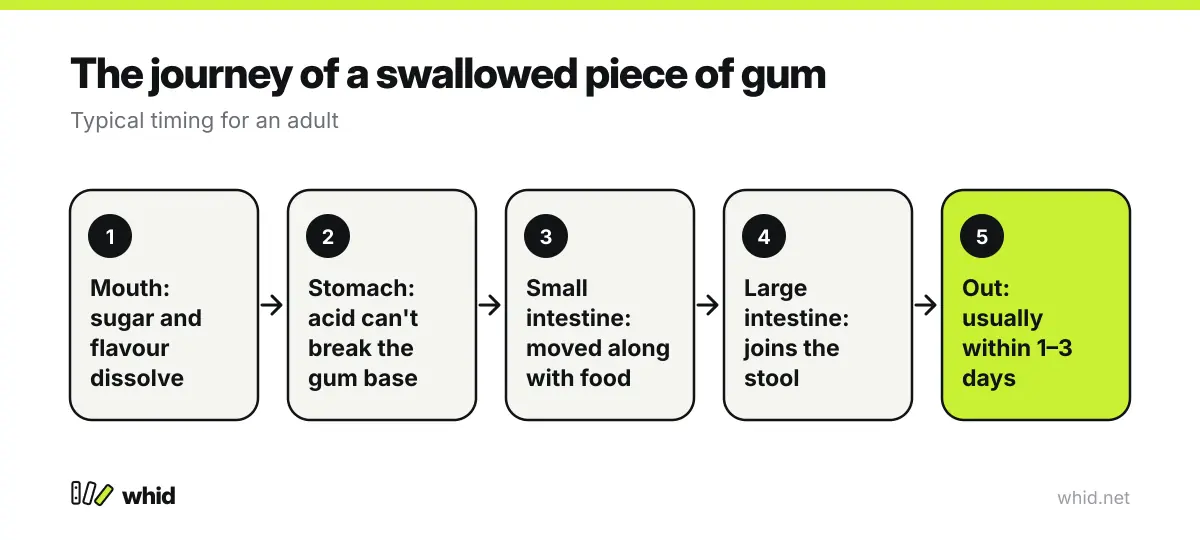
The same property means your stomach can't dissolve it either. Acid and digestive enzymes break down the sugar, but the polymer comes out the other end looking much as it went in.
Indigestible does not mean stuck
"Can't be digested" and "stays inside you" are two very different things. Your digestive system handles indigestible material every day: corn kernel skins, seeds and insoluble fibre all pass through without being broken down. The gut moves its contents along with rhythmic muscle contractions, and a single piece of gum is carried along with everything else. For most people, that means it leaves within one to three days.
The rare cases that cause trouble
Doctors have reported cases, mostly in young children, where swallowed gum formed a bezoar — a compact mass that blocks part of the gut. The common thread in those reports was habit: children who swallowed gum many times a day, sometimes together with coins, sunflower seeds or other small items that the gum glued together. Constipation, belly pain and vomiting were the warning signs.
That's why many paediatricians suggest waiting until children are old enough to understand that gum is for chewing, not swallowing, and why a child who regularly swallows gum and then develops constipation or stomach pain should be checked.
What about choking?
For small children, the bigger risk is not swallowing gum but choking on it. Gum is sticky and can block the airway. If you give gum to a young child, make sure they're sitting down and supervised.
The bottom line
Swallowing gum by accident is harmless for almost everyone. Spitting it out (into a bin, not on the pavement) is still the better habit — not because of the seven-year myth, but because large amounts swallowed regularly can occasionally cause a blockage.